
Why Commercial Truck Insurance North Carolina is Critical for Your Business
Commercial truck insurance North Carolina is a legal requirement and a fundamental shield for your trucking operation in the Tar Heel State. Whether you’re hauling furniture from High Point, transporting refrigerated goods from the coast, or moving freight along I-40, you face unique risks every day—and North Carolina law mandates specific coverage to keep you rolling legally.
Here’s what you need to know right now:
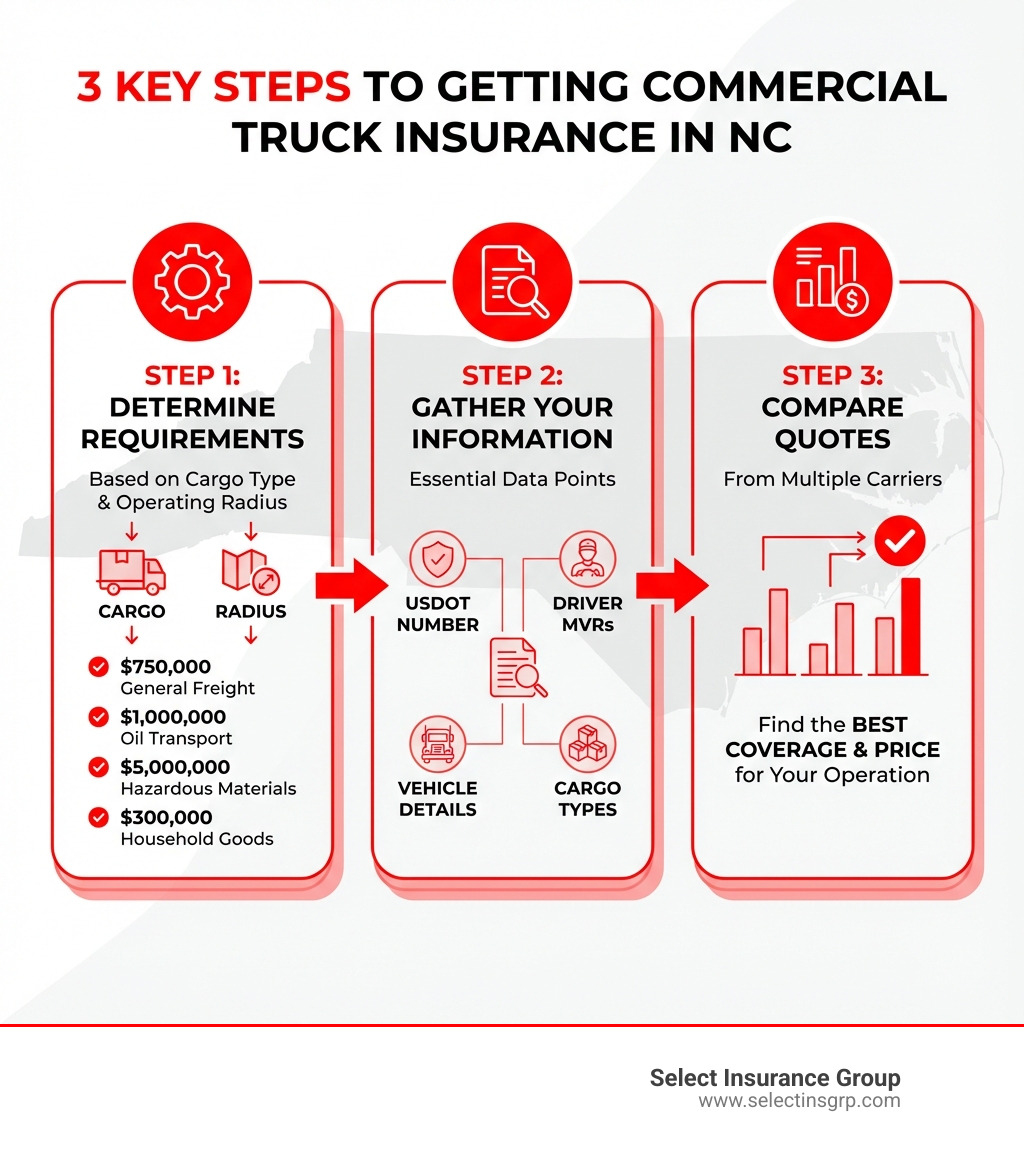
- Minimum liability for general freight: $750,000 (intrastate and interstate)
- For oil transport: $1,000,000
- For hazardous materials: $5,000,000
- For household goods movers: $300,000
- Typical annual cost: $8,000 to $11,500 (varies by operation, cargo, and driver history)
- Required filings: Form E and Form H (state), MCS-90 and BMC-91X (federal), UCR, and BOC-3
North Carolina is home to nearly a million small businesses, many of which depend on commercial trucks to deliver products across the state’s diverse landscape—from the Outer Banks to the Appalachian Mountains. The trucking industry fuels this economy, but operating without proper insurance exposes you to catastrophic financial loss, legal penalties, and the potential shutdown of your business.
Commercial truck insurance isn’t just about meeting state minimums. It’s about protecting your investment in your vehicles, safeguarding the cargo you’re entrusted with, and ensuring you can recover quickly if an accident, theft, or natural disaster strikes. The right policy covers bodily injury, property damage, cargo loss, and even legal defense costs—giving you peace of mind as you steer North Carolina’s highways and byways.
As D.J. Hearsey, founder and CEO of Select Insurance Group, I’ve spent over three decades helping trucking businesses across the Southeast secure custom commercial truck insurance North Carolina policies that balance comprehensive protection with affordability. My team and I work with more than 20 carriers to shop your coverage, ensuring you get competitive rates and responsive service no matter where you operate in the state.
Must-know commercial truck insurance north carolina terms:
Decoding North Carolina’s Truck Insurance Mandates
Operating a commercial truck in North Carolina means navigating a dual system of regulations: those set by the state and those mandated by the federal government. Understanding these distinctions is crucial for ensuring your commercial truck insurance North Carolina policy keeps you fully compliant, whether you’re making local deliveries or crossing state lines.
At its heart, compliance is about demonstrating financial responsibility. North Carolina law requires that any commercial motor vehicle owner has financial responsibility for the operation of their vehicle in an amount equal to that required for for-hire carriers transporting non-hazardous property in interstate or foreign commerce. This means a minimum of $750,000 in liability insurance is generally required by state law for most commercial trucking operations.
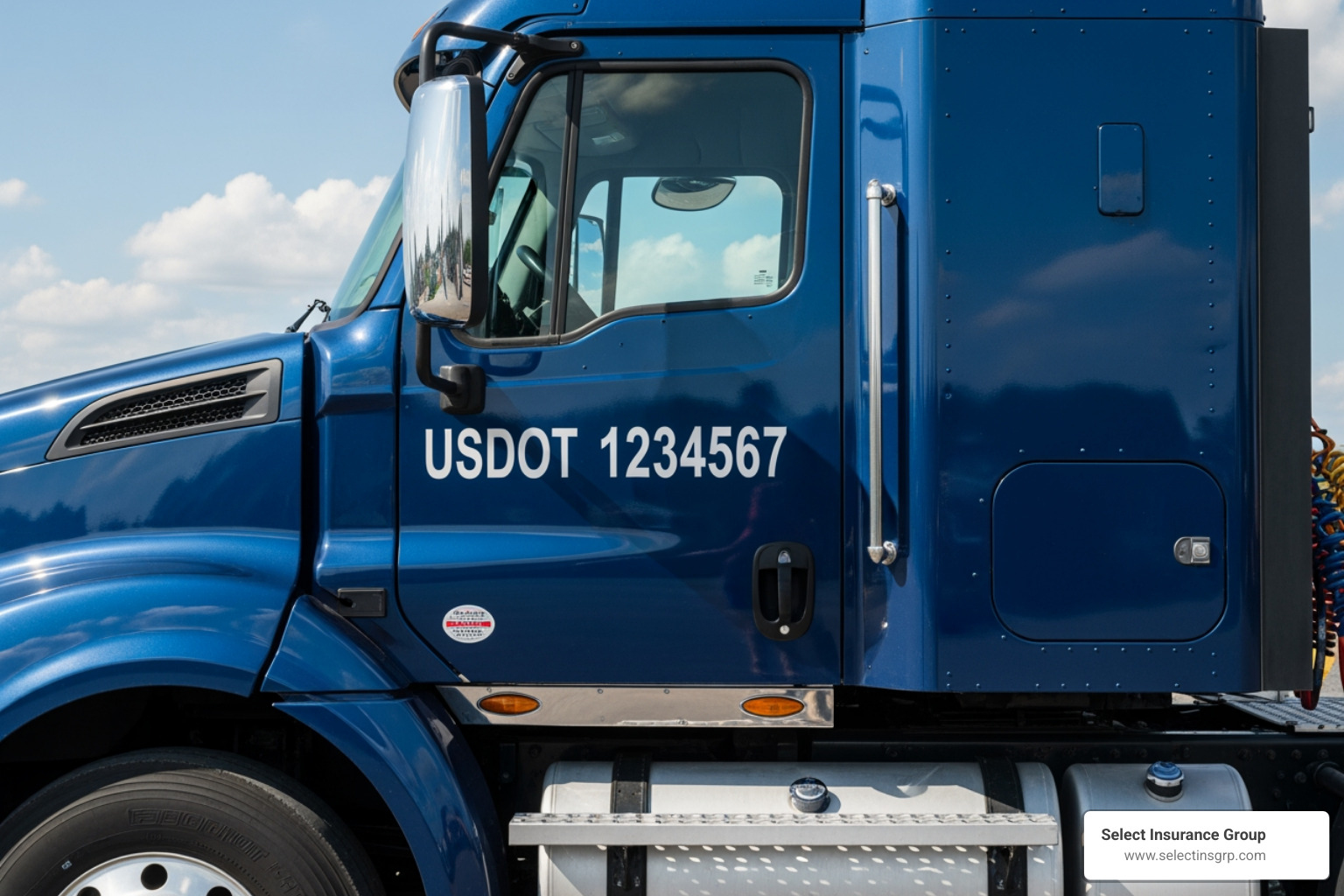
The North Carolina Department of Transportation (NCDOT) oversees intrastate commercial trucking, while the Federal Motor Carrier Safety Administration (FMCSA) handles interstate operations. Even if you only operate within state lines, if your truck weighs over 10,000 GVW, you’ll still need a USDOT Number and must adhere to specific insurance minimums. For more information directly from the state, you can check out Commercial Trucking information from NCDOT.
Mandatory Insurance Requirements and Filings
Beyond just carrying a policy, you need to prove it to the relevant authorities through specific filings. These filings act as proof to state and federal agencies that you meet the necessary insurance requirements.
For intrastate operations (trucks operating only within North Carolina), you’ll typically encounter:
- Form E: This form certifies that your insurance company has filed a policy with the NCDOT and that you have the required liability coverage.
- Form H: This form certifies that your insurance company has filed a policy with the NCDOT and that you have the required cargo liability coverage (if applicable).
For interstate operations (trucks crossing state lines), federal filings come into play:
- MCS-90 Endorsement: This is an endorsement attached to your liability policy, ensuring that the public is protected up to federal minimums, regardless of any policy exclusions. It’s not a certificate of insurance but a guarantee of financial responsibility.
- BMC-91X Filing: This filing is submitted by your insurance company to the FMCSA, proving you have the required public liability insurance for interstate operations.
- Unified Carrier Registration (UCR): This annual program requires individuals and companies that operate commercial vehicles in interstate or international commerce to register and pay an annual fee based on fleet size.
- BOC-3 Filing: This designates a “process agent” in each state where you operate. A process agent is a person or company that can receive legal documents on your behalf. This ensures that you can be served legal papers in any state you do business in.
These filings are more than just paperwork; they are your ticket to legal operation and a testament to your commitment to safety and responsibility on the road.
How Liability Limits Vary by Operation and Cargo
The amount of liability insurance you need isn’t a fixed number; it largely depends on what you’re hauling and where you’re hauling it. As experts in commercial truck insurance North Carolina, we understand these nuances are critical.
Federal regulations generally require a minimum of $750,000 in liability insurance for a for-hire carrier (with a gross vehicle weight rating of 10,000 pounds or more) that engages in interstate or foreign commerce and transports non-hazardous property. As mentioned, North Carolina’s state law aligns with this minimum for financial responsibility.
However, these limits can skyrocket depending on the cargo. Here’s a quick look at how minimum liability limits for intrastate operations in North Carolina vary by cargo type:
| Cargo Type | Minimum Liability Limit |
|---|---|
| General Freight Carriers | $750,000 |
| Oil Transport | $1,000,000 |
| Hazardous Materials | $5,000,000 |
| Household Goods Movers | $300,000 |
It’s clear that if you’re transporting anything considered hazardous, the stakes (and the insurance requirements) are significantly higher. This isn’t just about protecting your business; it’s about protecting the public and the environment from potentially devastating incidents. For-hire carriers, those who transport goods for others, typically face higher minimums due to the increased public exposure and liability. Private carriers, who transport their own goods, may have slightly different requirements, but generally, the federal and state minimums still apply to ensure adequate financial responsibility.
The Role of the International Registration Plan (IRP)
North Carolina is a proud member of the International Registration Plan (IRP), which is a registration reciprocity agreement. Think of it as a handshake agreement between states and Canadian provinces that simplifies registration for commercial vehicles operating across multiple jurisdictions.
Under IRP, instead of registering your truck in every state you operate in, you register it once in your base state (North Carolina, in this case). You then pay apportioned registration fees based on the total distance your truck operates in each member jurisdiction. The beauty of IRP is that you receive a single license plate and a single cab card (the registration document) that is valid in all IRP member jurisdictions. No more juggling multiple plates or permits!
While IRP primarily deals with registration fees, it indirectly impacts your commercial truck insurance North Carolina requirements because you need to provide proof of insurance to complete your IRP registration. It ensures that any vehicle operating interstate is properly registered and insured. Accurate mileage reporting is crucial for IRP renewal, so keep those logbooks (or ELDs) carefully updated! To dive deeper into IRP, you can always Learn more at the International Registration Plan’s website.
A Deep Dive into Commercial Truck Insurance Coverage Types
When it comes to commercial truck insurance North Carolina, merely meeting the minimum liability requirements is like bringing a spoon to a knife fight. It might get you by, but it won’t offer the robust protection your business truly needs. Building a comprehensive policy means going beyond the basics and considering specialized protection that addresses the unique risks of the trucking industry.
Core Coverages for Every NC Trucker
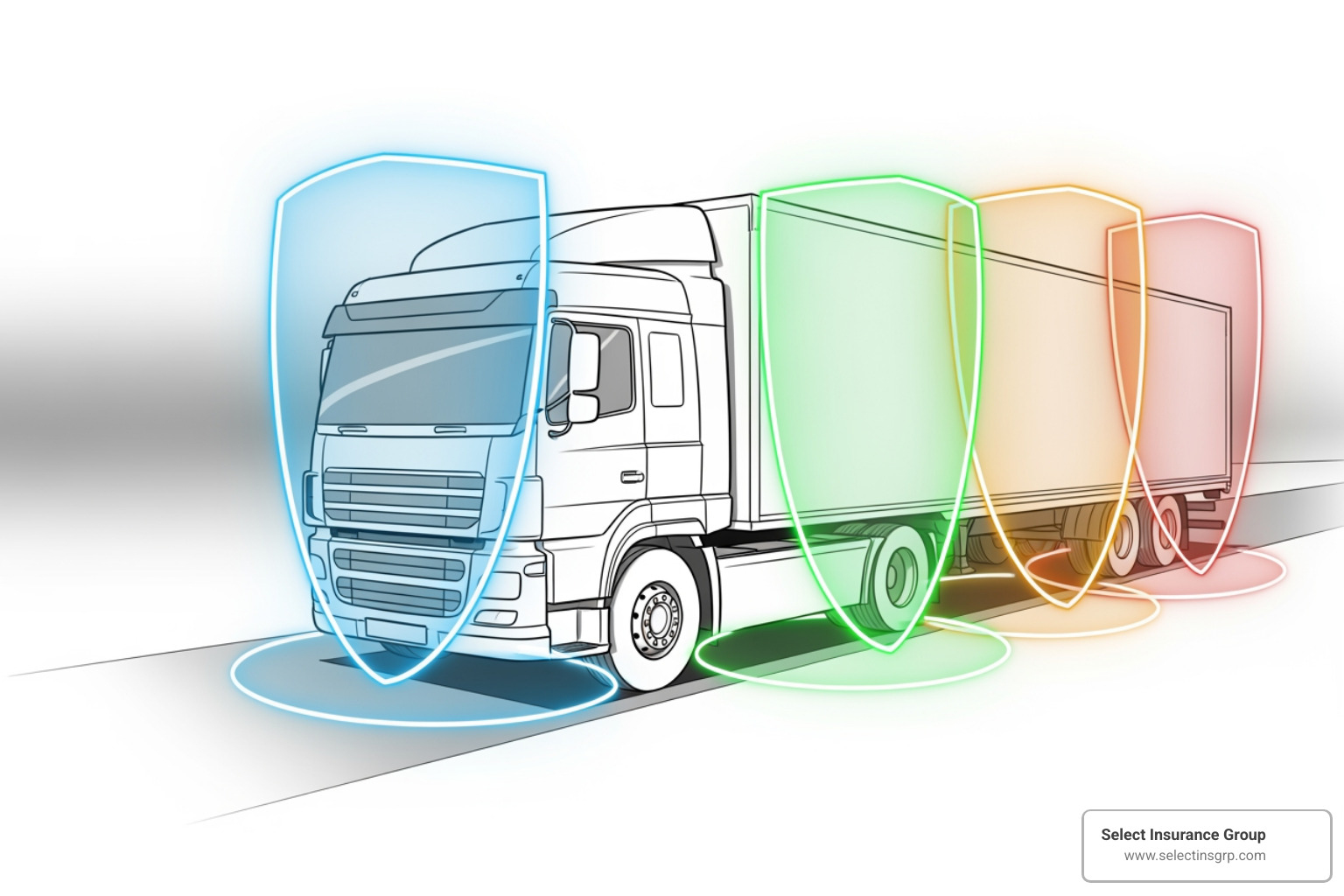
No matter what you haul or where you go, certain coverages form the bedrock of any solid commercial truck insurance North Carolina policy.
- Primary Liability Insurance: This is the big one, the non-negotiable. It covers costs associated with bodily injury and property damage to others if your truck is at fault in an accident. Without it, you’re exposed to potentially crippling lawsuits. We’re talking medical bills, lost wages, vehicle repairs for other parties, and legal defense fees. Federal regulations and North Carolina law mandate a minimum of $750,000 for most operations, but we often recommend higher limits to truly protect your assets. For more details on this essential protection, explore our page on Truck liability coverage.
- Physical Damage Coverage: Your truck is your livelihood, often a significant investment. Physical damage insurance protects your vehicle. This typically includes:
- Collision Coverage: Pays for repairs or replacement of your truck if it’s damaged in a collision with another vehicle or object, regardless of fault.
- Comprehensive Coverage: Protects against non-collision incidents like theft, vandalism, fire, natural disasters (think North Carolina hurricanes!), or hitting an animal.
- Cargo Insurance: This covers the goods you’re hauling. If your freight is damaged, lost, or stolen during transit, motor truck cargo insurance steps in to cover the financial loss. This is absolutely critical because your clients entrust you with valuable goods, and you can be held personally liable for their loss. For a deeper understanding of this vital coverage, visit our guide on Cargo insurance for truckers.
Specialized and Optional Coverages
While the core coverages are essential, the diverse nature of trucking in North Carolina means you’ll likely need additional, specialized protection. Here are some key optional coverages we often recommend:
- Bobtail Insurance: If you’re an owner-operator leased to a motor carrier, this covers your truck when you’re driving it without a trailer (bobtailing), and you’re not under dispatch. It’s for those “off-duty” moments.
- Non-Trucking Liability (NTL): Similar to bobtail, NTL provides limited liability coverage for when your truck is being used for personal, non-business purposes (e.g., driving to the grocery store on a weekend).
- Trailer Interchange Coverage: If you haul trailers that you don’t own (e.g., from another carrier), this covers physical damage to those non-owned trailers while they’re in your possession.
- Uninsured/Underinsured Motorist (UM/UIM): This protects you if you or your passengers are injured, or your truck is damaged, by a driver who doesn’t have insurance or whose insurance isn’t enough to cover the damages. North Carolina law often requires UM coverage for commercial vehicles.
- Reefer Breakdown Coverage: If you haul temperature-sensitive goods (like fresh produce from the North Carolina farms or seafood from the coast), this covers spoilage or loss of cargo due to the refrigeration unit failing.
- General Liability Insurance: This covers incidents that occur away from your vehicle, such as a slip and fall at your terminal, or property damage caused by your operations but not directly involving your truck on the road.
- Workers’ Compensation: If you have employees, this is typically mandatory in North Carolina. It covers medical expenses and lost wages for employees injured on the job. For owner-operators without employees, occupational accident coverage can be a good alternative. For more on this, check out North Carolina Workers Compensation.
Commercial Truck vs. Personal Auto Insurance
It’s a common misconception, but you cannot use your personal auto insurance policy for commercial trucking. Trying to do so is a recipe for disaster and can lead to denied claims and severe financial penalties. The differences between commercial truck insurance North Carolina and personal auto insurance are vast and fundamental:
- Business Use Exclusions: Personal auto policies almost universally exclude coverage for vehicles used for business purposes, especially for hire.
- Higher Liability Limits: Commercial trucks, due to their size, weight, and the potential for severe damage or injury, require significantly higher liability limits than personal vehicles. North Carolina’s state minimum for personal auto is 30/60/25 (meaning $30,000 for each person injured, $60,000 for all people injured, and $25,000 for property damage), which pales in comparison to the $750,000+ required for commercial trucks.
- Vehicle Types Covered: Commercial policies cover a broader range of vehicle types, from semi-trucks and dump trucks to box trucks and specialized equipment, with specific considerations for their unique risks.
- Policy Complexity: Commercial policies are far more complex, incorporating specialized coverages like cargo, non-trucking liability, and various filings to meet regulatory demands.
- Risk Assessment: Insurers assess commercial risks differently, considering factors like cargo type, operating radius, driver experience, and fleet safety records.
Essentially, personal auto insurance is designed for personal use, while commercial truck insurance North Carolina is built to handle the higher stakes and complex regulatory landscape of the trucking industry. For a broader understanding of auto insurance in general, you can Read the NC Consumer’s Guide to Auto Insurance. And if you’re curious about personal auto, we have resources on North Carolina Auto Insurance and North Carolina Business Auto.
What Determines the Cost of Commercial Truck Insurance North Carolina?
The question we hear most often is, “How much does commercial truck insurance North Carolina cost?” It’s a fair question, but the answer is rarely simple. While the cost for commercial truck insurance North Carolina typically ranges from $8,000 to $11,500 annually, this is just an average. There’s truly no one-size-fits-all price because your premium is a direct reflection of your unique risk profile.
Every insurance company performs a detailed risk assessment, much like a detective piecing together clues about your operation. They want to understand every factor that could lead to a claim. For a general overview of these costs, you can visit our page on Average Truck Insurance Cost.
How Your Operations and Cargo Affect Premiums
The nature of your trucking operation and the cargo you haul are huge determinants of your insurance costs.
- Cargo Type: This is perhaps the biggest factor. As we saw earlier, hauling hazardous materials can lead to premiums five times higher than general freight, simply because the potential for catastrophic damage and liability is so much greater. Even high-value goods (electronics, pharmaceuticals) will drive up costs due to increased theft risk and replacement value.
- Operating Radius: Do you stay local, within a 50-mile radius of Charlotte? Or are you a long-haul carrier crisscrossing the country? The wider your operating radius and the more miles you log annually, the greater your exposure to potential accidents, and thus, the higher your premiums.
- Interstate vs. Intrastate: Interstate operations generally face higher premiums due to the added regulatory complexities (FMCSA filings, IRP) and increased exposure to varied road conditions and traffic laws across multiple states.
- Fleet Size: While a larger fleet might qualify for some discounts, more trucks on the road inherently mean more risk, which can increase overall costs.
How Driver and Vehicle Specifics Impact Your Rate
Beyond what and where you haul, who is driving and what they’re driving play a crucial role in determining your commercial truck insurance North Carolina rates.
- Driver History (MVR): Clean Motor Vehicle Records (MVRs) are golden. Drivers with a history of accidents, speeding tickets, or other violations in the past 3-5 years will significantly increase your premiums. Insurers view a clean record as a strong indicator of responsible driving.
- Years of CDL Experience & Driver Age: Experienced drivers, especially those with several years of a clean Commercial Driver’s License (CDL) record, are often seen as lower risk. Younger, less experienced drivers (under 25 or with less than 2 years CDL experience) typically face higher rates.
- Vehicle Age and Condition: Newer trucks, while having a higher replacement value, might sometimes qualify for lower premiums due to advanced safety features (like automatic emergency braking, lane departure warnings) and better reliability. Older vehicles, conversely, might cost more to insure if they’re prone to breakdowns or lack modern safety tech. However, a well-maintained older truck with detailed service records can still get competitive rates.
- The Type and Size of the Truck: Specialized vehicles like tankers, refrigerated trucks, or heavy haulers typically cost more to insure than standard dry vans. This is due to their specialized equipment, higher replacement costs, and sometimes the inherent risk associated with their operation.
Frequently Asked Questions about NC Truck Insurance
We’ve covered a lot of ground, but you likely still have specific questions. Here are some of the most common inquiries we receive about commercial truck insurance North Carolina:
What are the differences between state and federal insurance filings for commercial trucks in North Carolina?
The core difference lies in the authority and scope. State filings (like Form E and Form H) are submitted to the North Carolina Department of Motor Vehicles (NCDMV) or NCDOT. They demonstrate that your commercial truck insurance North Carolina policy meets the minimum liability and cargo requirements for operations solely within the state’s borders (intrastate commerce). These filings ensure compliance with North Carolina’s specific laws.
Federal filings (such as the MCS-90 endorsement and BMC-91X) are submitted to the Federal Motor Carrier Safety Administration (FMCSA). These are mandatory for any trucking operation engaging in interstate commerce (crossing state lines) or transporting certain types of hazardous materials, regardless of whether they cross state lines. Federal filings prove compliance with FMCSA regulations, which often have higher minimum liability limits than individual state requirements, especially for certain cargo types. State filings satisfy North Carolina; federal filings satisfy the U.S. government. For more detailed federal requirements, you can consult Motor Carrier Insurance Requirements.
What are the specific insurance requirements for an owner-operator in North Carolina?
This depends heavily on your operating structure.
- If you’re an owner-operator leased to a motor carrier: Your leasing agreement will dictate much of your insurance needs. The motor carrier you’re leased to will typically provide the primary liability coverage (the $750,000+ policy that covers damage/injury to others). However, you, as the owner-operator, will usually be responsible for:
- Bobtail or Non-Trucking Liability: To cover your truck when it’s not under dispatch or being used for personal reasons.
- Physical Damage: To protect your truck from collision, comprehensive, fire, and theft.
- Occupational Accident: As an independent contractor, you’re usually not covered by the carrier’s Workers’ Comp, so this protects you if you’re injured on the job.
- If you operate under your own authority (not leased to a carrier): You are responsible for all your own insurance. This means you’ll need the full suite of coverages, including:
- Primary Liability: Meeting federal and state minimums based on your cargo and operating radius.
- Physical Damage: For your truck.
- Motor Truck Cargo: To cover the goods you haul.
- General Liability: For incidents not directly related to your truck on the road.
- Workers’ Compensation: If you hire other drivers.
Understanding these distinctions is crucial for owner-operators to avoid coverage gaps. We have a dedicated resource on Owner Operator Semi Truck Insurance that digs deeper into this topic.
How much commercial truck insurance north carolina do I really need?
The minimum liability limits set by the state and federal governments are just that: minimums. They are the bare legal requirement to operate, not necessarily what you should carry to be truly protected.
We always recommend assessing your true risk exposure:
- Consider your cargo’s value: If you’re hauling $200,000 worth of electronics, a $100,000 cargo policy won’t cut it.
- Think about catastrophic accidents: A major accident involving multiple vehicles or severe injuries can easily exceed the $750,000 minimum liability. Imagine a multi-vehicle pile-up on I-85 near Charlotte. The costs for medical care, property damage, and legal fees can quickly reach millions.
- Protect your assets: Your business, your personal assets, and your financial future are on the line. Being underinsured can wipe out everything you’ve worked for.
For these reasons, we strongly advise considering higher liability limits than the minimums. Many carriers opt for $1,000,000 or even $2,000,000 in liability coverage. Additionally, an umbrella policy can provide an extra layer of protection, kicking in once your primary liability limits are exhausted, offering peace of mind against the most severe financial threats. It’s about protecting your livelihood, not just meeting a checklist.
Your Next Steps to Getting Covered
Navigating the complex world of commercial truck insurance North Carolina can feel like driving through a dense fog. But with the right knowledge and the right partner, you can clear the path ahead and ensure your business is fully protected.
Proactive risk management isn’t just a buzzword; it’s a fundamental strategy for any successful trucking operation. By understanding the mandatory requirements, exploring comprehensive coverage options, and knowing what factors influence your costs, you’re already taking significant steps towards safeguarding your business.
This is where the role of an independent insurance agent becomes invaluable. Unlike captive agents who work for a single insurance company, independent agents, like us at Select Insurance Group, have access to multiple carriers. This means we can:
- Shop the market for you: We compare quotes and coverage options from a variety of reputable insurance providers specializing in trucking.
- Offer custom solutions: We don’t believe in one-size-fits-all. We’ll work with you to understand your unique operations, cargo, and risk profile to craft a commercial truck insurance North Carolina policy that fits your specific needs.
- Provide expert guidance: With over 30 years of experience, we understand the nuances of state and federal regulations, helping you stay compliant and avoid costly penalties.
At Select Insurance Group, we pride ourselves on being your trusted partner. Our team is dedicated to providing competitive rates and superior customer service, helping you make informed decisions about your commercial truck insurance North Carolina. We’re here to get you rolling and keep you compliant, so you can focus on what you do best: moving America’s goods.
Ready to secure comprehensive commercial truck insurance North Carolina that protects your business and gives you peace of mind?
Get a quote for your North Carolina Commercial Insurance
We also invite you to learn more about our services and reach out to us: