
Why Moped Insurance Matters for Every Rider
When you hit the open road on a scooter or moped, moped insurance is your key to financial protection and peace of mind. It’s not just a good idea; in most states, it’s a legal requirement.
If you’re wondering what moped insurance is or why you need it, here’s a quick rundown:
- What it is: Moped insurance is a policy that covers financial losses related to your moped or scooter. It often falls under motorcycle insurance policies.
- Legal requirement: Most states require at least liability coverage to operate a moped or scooter on public roads.
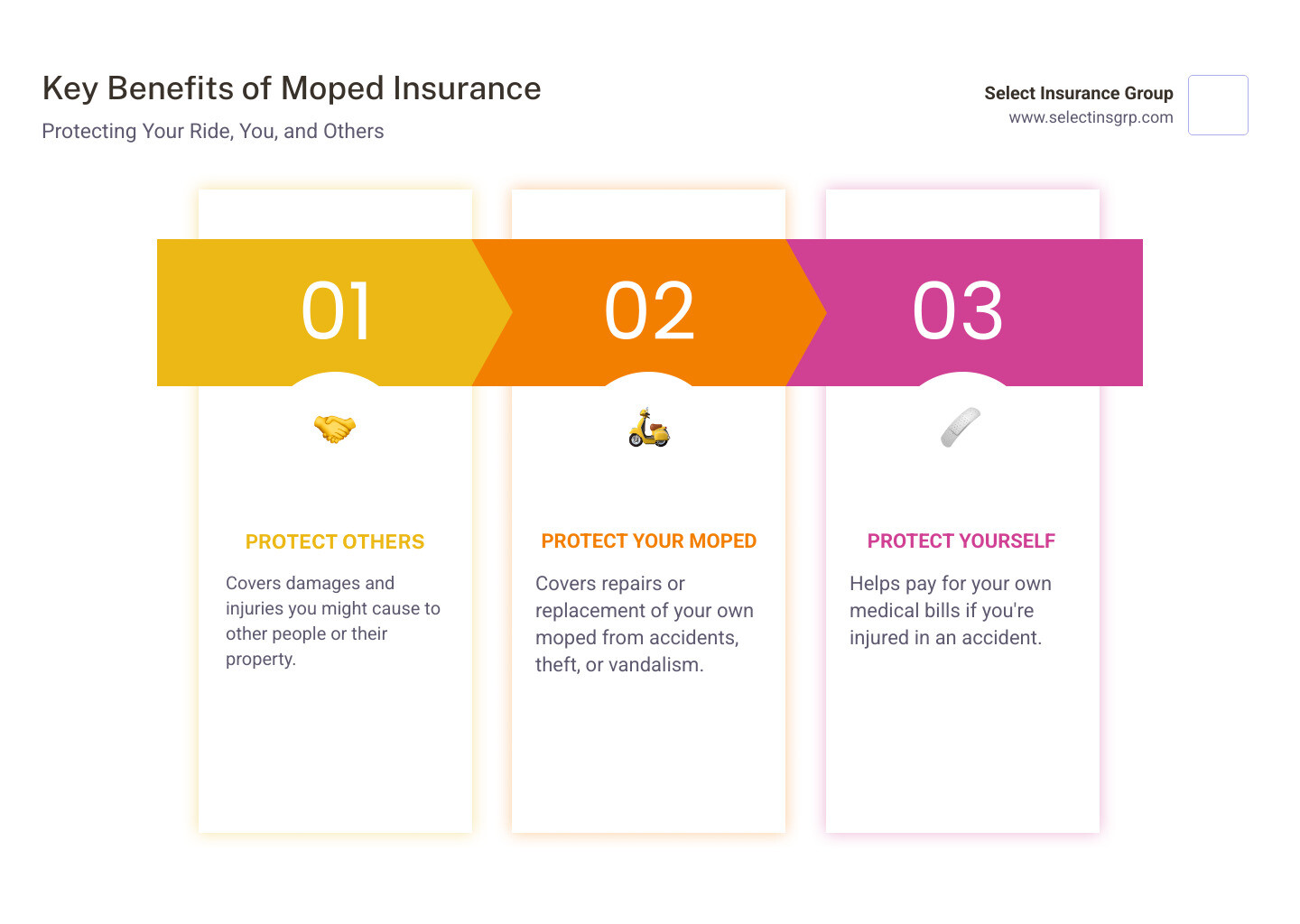
- Protects others: Liability coverage pays for damages and injuries you might cause to other people or their property in an accident.
- Protects your moped: Optional collision and comprehensive coverage can pay for repairs or replacement of your own moped if it’s damaged, stolen, or vandalized.
- Protects you: Medical payments coverage can help cover your own medical bills if you’re injured in an accident.
Mopeds and scooters are fantastic for cost-effective transportation, offering freedom and efficiency whether you’re commuting or just cruising. But just like any vehicle, they come with risks. The right insurance ensures you’re covered for unexpected events, from minor scrapes to more serious accidents.
I’m D.J. Hearsey, founder of Select Insurance Group. My 30+ years in the industry have shown me the critical need for proper moped insurance to protect riders and their investments. We’re here to help you understand your options and find the best fit.
Quick moped insurance definitions:
Moped vs. Scooter vs. Motorcycle: What’s the Difference?
Before we dive into the nitty-gritty of moped insurance, let’s clear up some common confusion. The terms “moped,” “scooter,” and “motorcycle” are often used interchangeably, but they refer to distinct types of two-wheeled (or sometimes three-wheeled) vehicles with different legal and insurance implications. Understanding these differences is the first step to ensuring you have the right coverage.
Here’s a quick breakdown of what sets them apart:
| Feature | Moped | Scooter | Motorcycle |
|---|---|---|---|
| Engine Size | Typically 50cc or less | Usually 50cc to 250cc (some larger) | 50cc to well over 2,000cc |
| Top Speed | Around 30 mph (45 km/h) or less | Up to 70-80 mph (110-130 km/h) or more | Up to 150 mph (240 km/h) or more |
| Design | Step-through frame, often with pedals | Step-through frame, footrests, often storage | “Straddle” design, fuel tank between knees |
| Transmission | Mostly automatic | Mostly automatic | Manual (clutch/gears) |
| Licensing | Varies by state; sometimes standard DL | Often requires motorcycle endorsement | Requires motorcycle endorsement (Class M) |
| Insurance Class | Often covered under motorcycle policy | Often covered under motorcycle policy | Specific motorcycle insurance |
The key distinctions typically revolve around engine size and top speed. For instance, some jurisdictions define a scooter as a vehicle with two or three wheels, a maximum speed of 70 km/h, and an engine displacement of no more than 50 cm3 with an automatic transmission. If a scooter exceeds that speed, it’s considered a motorcycle. These classifications directly impact legal requirements like licensing and, of course, your moped insurance needs.
State-Specific Legal Requirements
The legal classification of your two-wheeled companion isn’t just a fun fact; it dictates your state’s specific requirements for licensing, registration, and most importantly, moped insurance. While many states group mopeds and scooters under motorcycle insurance policies, the exact rules can vary significantly.
For us, serving riders across Florida, the Carolinas, Virginia, and Georgia, it’s crucial to understand these nuances:
- Florida: Florida’s laws differentiate between mopeds, scooters, and motorcycles based on engine size and speed. Generally, vehicles with engines 50cc or less and a top speed of 30 mph might have different requirements than larger ones. For specifics, you’ll want to check out the Florida motorcycle insurance rules.
- The Carolinas: In North Carolina, the definition often hinges on engine size and speed. Some low-powered mopeds might only require a standard driver’s license, while others will need a motorcycle endorsement. Our guide on North Carolina requirements can help clarify. Similarly, South Carolina has its own set of rules, including minimum insurance coverage (25/50/25 for motorcycles) and helmet laws for riders under 21. For more details on these, refer to South Carolina regulations.
- Virginia: Virginia also has specific criteria for mopeds, often linked to engine displacement and top speed. Minimum insurance requirements for motorcycles in Virginia are detailed in our Virginia motorcycle insurance laws and minimum insurance in Virginia resources.
- Georgia: Georgia’s laws also classify these vehicles, affecting everything from registration to insurance. You can find more information on Georgia moped laws.
Always check with your state’s Department of Motor Vehicles (DMV) for the exact definitions and current regulations that apply to your specific vehicle. This will ensure you’re compliant and properly insured.
Do You Need Moped Insurance for Electric Models?
With the rise of eco-friendly transportation, electric mopeds, electric scooters, and e-bikes are becoming increasingly popular. But does “electric” mean “exempt” from insurance? Not necessarily!
The need for moped insurance for electric models depends on state classification, which is typically based on power output (watts) and speed.
- Electric Mopeds and Scooters: Many states classify electric mopeds and scooters similarly to their gas-powered counterparts. If an electric model’s power or speed exceeds certain thresholds (e.g., 250W or 25 km/h), it may require motor liability insurance. Some fall into specific vehicle categories that mandate insurance and can be covered by the same policies as gas models.
- E-Bikes: E-bikes are often treated like traditional bicycles, but this is changing. High-speed e-bikes, like Class 3 models capable of over 28 mph, may have specific insurance requirements in some states. Even if not required, e-bike insurance is a smart investment to protect against accidents, theft, or damage.
When considering an electric model, it’s essential to:
- Check Local Regulations: Always verify your specific state’s laws regarding electric vehicles. These laws are evolving rapidly.
- Assess Your Vehicle’s Specs: Understand your electric model’s power output and top speed, as these are key factors in its classification.
- Differentiate from Traditional Bicycles: Don’t assume an electric motor automatically exempts you from vehicle laws.
We understand that navigating these classifications can be confusing. That’s why we’re here to help you determine the specific insurance requirements for your electric ride, just as we help with other specialized vehicles like those found in RV insurance for electric models.
Understanding Your Moped Insurance Coverage
So, you’ve got your moped, you know the basic differences, and you’re ready to roll. Now, let’s talk about the shield that protects your joyride: moped insurance. Just like any vehicle, having the right policy components is crucial for protecting your investment and your wallet. It’s about finding that sweet spot between mandatory coverage and optional add-ons that give you complete peace of mind.
Most moped insurance policies are structured similarly to motorcycle insurance, offering a blend of standard and optional coverages. The goal is to cover financial losses that can arise from accidents, theft, or damage. Think of it as a comprehensive safety net, ensuring you’re not left in a financial ditch if something goes awry. For a deeper dive into making smart insurance choices, check out our guide to cheap motorcycle insurance.
Standard Coverage Types
These are the foundational pieces of any moped insurance policy, often mandated by state law. They primarily protect others from damages or injuries you might cause.
- Liability Coverage: This is the big one, and it’s legally required in most states. If you’re at fault in an accident, liability coverage steps in to pay for damages to other people or their property.
- Bodily Injury Liability: Covers medical expenses, lost wages, and pain and suffering for anyone you injure in an accident.
- Property Damage Liability: Pays for repairs or replacement of property you damage, such as another vehicle or a fence.
- State Minimums: Each state sets minimum liability limits you must carry. For instance, in South Carolina, the minimum is 25/50/25 ($25,000 in bodily injury liability per person, up to $50,000 per accident, and $25,000 in property damage). It’s important to understand these, as detailed in resources like minimum insurance in Virginia. We generally recommend higher limits than the state minimums to better protect your assets.
- Uninsured/Underinsured Motorist (UM/UIM): This coverage is a lifesaver. It protects you if you’re hit by a driver who doesn’t have insurance or doesn’t have enough to cover your damages and injuries. It also often covers hit-and-run incidents.
- Medical Payments (MedPay): Also known as Personal Injury Protection (PIP) in some states, MedPay covers medical expenses for you and your passengers, regardless of who is at fault in an accident. This can be crucial for immediate medical bills.
Optional Coverages for Full Protection
While standard coverages protect others, these optional add-ons protect you and your moped. They’re what turn a basic policy into a truly comprehensive one.
- Collision Coverage: This pays for damages to your moped if you hit another vehicle or object, or if your moped rolls over. If you’re still making payments on your moped, your lender will likely require this.
- Comprehensive Coverage: This is your shield for non-collision incidents. It covers damages to your moped from events like theft, vandalism, fire, natural disasters, and animal collisions. If your moped is stolen, comprehensive coverage helps you recoup its value.
- Roadside Assistance: This add-on can be a lifesaver if you’re stranded with a flat tire or mechanical issue. It typically provides emergency towing, fuel delivery, and battery jump-starts. Some policies even offer 24/7 assistance with added benefits for trip interruption.
- Carried Contents: Some policies offer this unique coverage, which protects personal belongings like your phone, helmet, or other gear if they’re damaged or stolen in a covered loss.
- Custom Parts & Equipment (CPE): If you’ve customized your moped with special paint, an upgraded exhaust, or other accessories, CPE coverage is essential. Standard policies often only cover factory parts, but this add-on can cover thousands of dollars in custom equipment.
- Trip Interruption: If your moped breaks down far from home on a trip, this coverage can help with expenses like lodging, transportation, and meals while your moped is being repaired.
Choosing the right combination of these coverages is about assessing your risk tolerance, your moped’s value, and your riding habits. We’re here to help you weigh these options and craft a policy that fits you like a glove.
How is the Cost of Moped Insurance Determined?
Ah, the big question: “How much does moped insurance cost?” The truth is, there’s no single answer because your premium is a unique calculation based on a multitude of factors. While mopeds and scooters often cost less to insure than traditional motorcycles, the price can still vary widely.

According to industry data, a barebones liability-only policy can cost as little as $75 per year, while some basic policies average around $300 annually. However, a full coverage policy with all the optional add-ons can approach $2,000 annually. For context, in South Carolina, a full coverage motorcycle policy averages about $360 annually, while liability-only is around $192. This shows that while moped insurance is generally cheaper, your chosen coverage level makes a huge difference.
If you’re looking to find the most budget-friendly options without compromising on essential protection, it’s worth exploring guides like ours on finding the cheapest motorcycles to insure.
Key Factors That Influence Your Premium
Insurance companies assess risk when they calculate your premium. The more risk they perceive, the higher your rate. Here are the primary factors that influence the cost of your moped insurance:
- Rider’s Age: Younger, less experienced riders (especially under 25) typically face higher premiums.
- Driving/Riding Record: A clean record with no accidents or traffic violations will earn you lower rates.
- Location and ZIP Code: Areas with higher theft rates, more traffic, or more accidents often have higher insurance costs.
- Moped Make and Model: Newer, more powerful, or high-value models generally cost more to insure than older, lower-powered ones.
- Engine Size: Smaller engines (e.g., 50cc) are typically cheaper to insure than larger ones.
- Claims History: If you’ve filed previous insurance claims, it can signal a higher risk to insurers.
- Credit-Based Insurance Score: In many states, your credit score can influence your insurance rates.
- Annual Mileage: The more you ride, the higher the chance of an accident, which can lead to higher premiums.
How to Get Discounts and Save Money
Who doesn’t love a good discount? Insurance providers offer various ways to lower your moped insurance premiums without sacrificing crucial coverage. Here are some common discounts you might qualify for:
- Multi-Policy Bundle: One of the easiest ways to save is by bundling your moped insurance with other policies, such as your car insurance or home insurance. Many companies offer significant discounts for being a loyal customer. Explore options like home insurance bundles to see how much you can save.
- Multi-Vehicle Discount: If you insure more than one moped, scooter, or motorcycle with the same provider, you could qualify for a discount.
- Safety Course Completion: Completing an approved motorcycle or moped safety course, like those offered by the Motorcycle Safety Foundation, demonstrates a commitment to safe riding and can often lead to a discount.
- Good Driver Discount: A clean driving record is your best friend. Many insurers reward drivers with no accidents or violations over a certain period with lower rates.
- Anti-Theft Devices: Installing an approved anti-theft system (like an alarm or GPS tracker) can reduce the risk of theft, and insurers might reward you with a discount.
- Paying in Full: If you can afford to pay your entire annual premium upfront instead of in monthly installments, many providers offer a small discount.
- Rider Group Affiliation: Belonging to certain moped or motorcycle rider groups or associations might also qualify you for specific discounts.
Always ask your insurance agent about all available discounts. A little digging can lead to significant savings on your moped insurance.
What to Do After a Moped Accident
No one wants an accident, but knowing what to do afterward makes a stressful situation more manageable. Your immediate actions are crucial for your safety, the safety of others, and the smooth processing of your moped insurance claim.
First and foremost, safety first!
- Stay Calm and Assess: Check yourself and others for injuries. If anyone is hurt, call 911 immediately.
- Move to Safety: If possible, move your moped and yourself out of traffic to prevent further incidents.
- Exchange Information: Get names, contact info, insurance details, and license plate numbers from all parties. If there are witnesses, get their contact information too.
- Call the Police: It’s wise to call the police, especially if there are injuries or significant damage. A police report is invaluable for your moped insurance claim and may be legally required.
- Document the Scene: Take photos or videos of the accident scene, vehicle damage, and road conditions. This visual evidence is very helpful.
- Do NOT Admit Fault: Stick to the facts when speaking with others. Do not apologize or admit fault, as this could negatively impact your claim.
- Notify Your Insurer: Contact your insurance provider as soon as possible. For general guidance, you can refer to our how to report a claim page.
Filing Your Insurance Claim
Once the immediate aftermath is handled, the next step is filing your moped insurance claim.
- Contact Your Agent: Reach out to us at Select Insurance Group. Our team will guide you through the specific steps and necessary documentation.
- Claim Process: Your insurer will open a claim, assign a claim number, and an adjuster. You can often start this process online or through a mobile app.
- Provide Documentation: Give your insurer all the information you gathered at the scene, including the police report number, photos, and witness contacts.
- Work with an Adjuster: The adjuster will investigate the accident, review the evidence, and assess the damages, which may include inspecting your moped.
- Get Repair Estimates: You will likely need to get repair estimates for your moped, and your adjuster will help with this process.
- Settlement: After the investigation, your insurer will offer a settlement based on your policy’s terms and coverage.
Throughout this process, clear communication with your insurance representative is key. We’re here to advocate for you and ensure a fair resolution.
Frequently Asked Questions about Moped Insurance
We get a lot of questions about moped insurance, and that’s great! It means riders are thinking proactively about their protection. Here are some of the most common inquiries we receive:
How much is insurance for a 50cc moped?
The cost of moped insurance for a 50cc model is generally lower than for larger vehicles, but it still varies. Based on industry data:
- Liability-only estimates: You might find policies as low as $75 per year, with basic liability coverage often ranging from $150-$350 annually.
- Full coverage estimates: If you opt for comprehensive and collision, the annual cost could range from $300 to over $1,000, depending on your circumstances. Some reports show full coverage can approach $2,000 annually for certain models.
These are just estimates. The actual price depends on factors like your age, driving record, location, moped model, and chosen deductibles. The best way to get an accurate quote is to contact us for a personalized assessment.
Can I add a moped to my car insurance?
This is a common question, and the answer is usually no. Mopeds and scooters are typically insured under a separate motorcycle insurance policy, not added directly to an auto policy. This is because two-wheeled vehicles have different risks and legal classifications than cars and require specialized coverage.
However, you can often get a multi-policy discount by bundling your moped insurance with your car insurance from the same provider. While you can’t usually “add” it to your car policy, bundling often results in significant savings. It’s a win-win: you get specialized coverage for your moped and a discount for your loyalty! If you’re exploring options for insuring vehicles without owning a car, you might find our information on non-owner auto insurance interesting, although it’s a different context.
Do I need a special license to ride a moped?
Licensing requirements for mopeds and scooters vary significantly by state, often depending on engine size and top speed. There isn’t a single, nationwide rule.
- Varies by State: For low-powered mopeds (e.g., 50cc or less with a top speed under 30 mph), a standard driver’s license may be sufficient in some states.
- Moped-Specific License: A few states have a specific moped license or permit.
- Motorcycle Endorsement (Class M): For more powerful scooters or mopeds that exceed certain speed or engine size thresholds, you will almost certainly need a motorcycle endorsement (Class M) on your driver’s license.
Our advice: Always check with your local Department of Motor Vehicles (DMV) for the exact licensing requirements in your state for your specific vehicle. Don’t assume; verify to avoid legal trouble!
Get the Right Moped Insurance Today
Navigating moped insurance doesn’t have to be a bumpy ride. We’ve covered the key differences between vehicle types, state legal requirements, coverage options, cost factors, and what to do after an accident.
Having the right moped insurance isn’t just about meeting a legal requirement; it’s about securing your financial future, protecting your investment, and enjoying the open road with peace of mind. Whether you’re commuting in Orlando, cruising the coast of Wilmington, NC, or enjoying the scenic routes of Richmond, VA, we’ve got you covered.
At Select Insurance Group, we are your trusted partner. With over 30 years of experience, we leverage our relationships with over 40 carriers to find competitive rates and provide superior customer service. We operate across Florida, the Carolinas, Virginia, and Georgia, so we understand the local nuances that impact your policy.
Don’t let uncertainty put a damper on your ride. Let us help you find the perfect moped insurance policy for your needs and budget.
Get a personalized Virginia motorcycle insurance quote now and ride smart, stay covered!