Understanding Your Coverage When Driving Someone Else’s Car
Liability for damage to non owned automobile is a critical insurance concept that protects you when you’re driving a vehicle you don’t own, whether you’ve rented a car for vacation, borrowed a friend’s truck, or are using a personal vehicle for business errands. Understanding what your policy does and does not cover in these situations is essential.
In many cases:
- Your personal auto insurance typically provides liability coverage (for injuries or property damage you cause to others) when driving a non-owned vehicle.
- Physical damage to the non-owned vehicle itself often requires specific coverage, such as Canada’s OPCF 27 endorsement or similar protection available through your own insurer.
- Business use creates additional exposure. If employees use personal vehicles for company business, both the employee’s personal policy and the employer can be held liable.
- Coverage gaps are common. Many drivers find after an accident that their standard policy does not cover damage to the rental or borrowed car they were driving.
The stakes are high. Plaintiff attorneys increasingly pursue businesses when accidents involve non-owned vehicles, and hired or non-owned auto (HNOA) liability ranks among the top risks for many organizations, yet it is one of the most neglected exposures.
In Canada, the OPCF 27 endorsement (Legal Liability for Damage to Non-Owned Automobiles) provides a clear framework for this coverage. While this standard applies specifically to Canadian policies, the principles and risks it addresses are universal. Understanding how this coverage works can help you identify similar gaps in your own insurance, whether you are in North Carolina, South Carolina, Florida, Virginia, Georgia, or elsewhere across the Southeast.
As D.J. Hearsey, I have spent over three decades helping clients across the Southeast steer complex insurance scenarios, including liability for damage to non owned automobile situations that can expose both individuals and businesses to significant financial risk. My team at Select Insurance Group has seen how the right coverage, or lack of it, can make all the difference when an accident occurs in a vehicle you do not own.
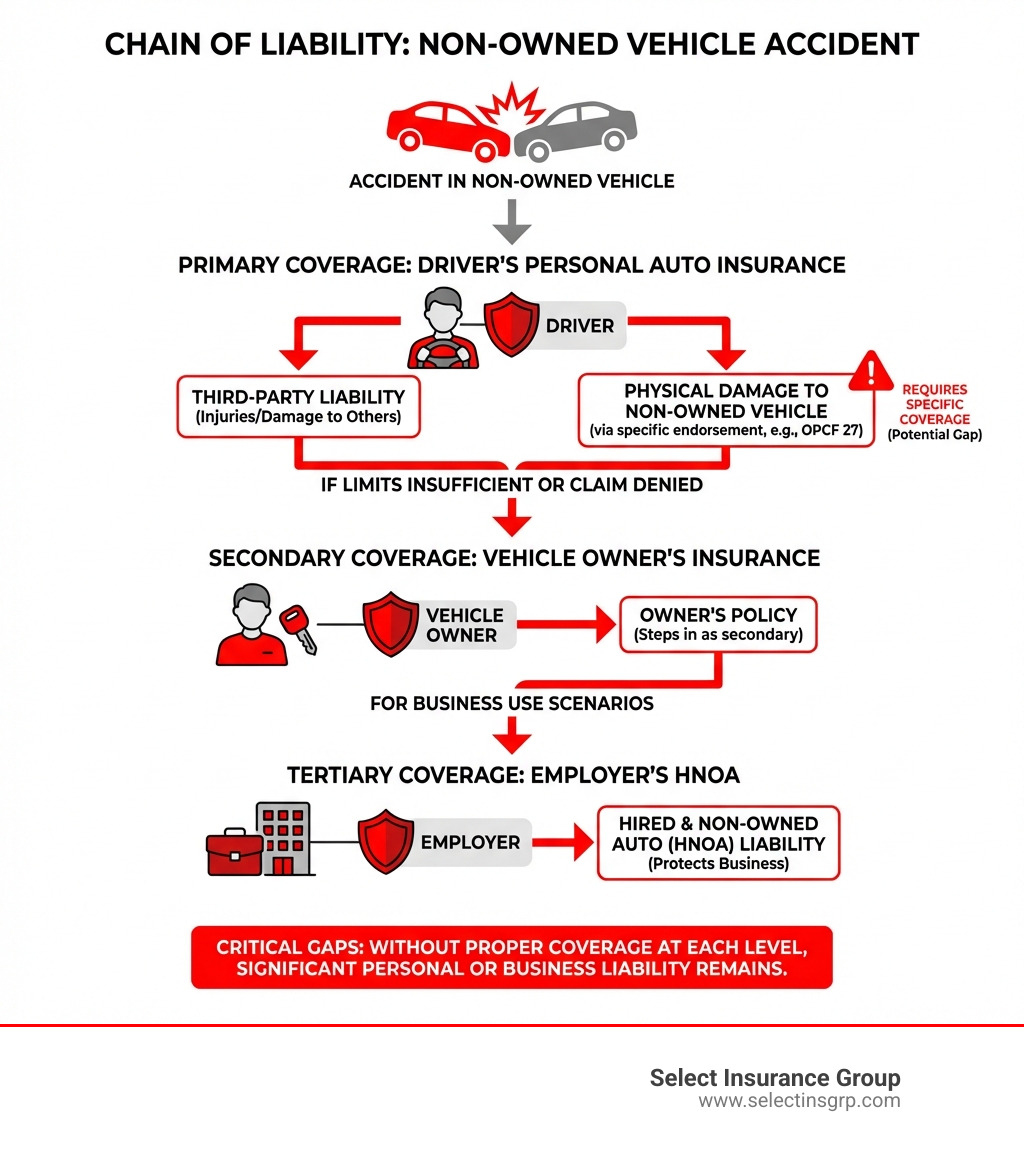
This infographic illustrates the typical chain of liability when an accident occurs in a non-owned vehicle: first, the driver’s personal auto insurance responds as primary coverage for liability to third parties. If physical damage occurs to the non-owned vehicle itself, specific endorsements (like OPCF 27 in Canada) or collision/comprehensive coverage may apply. If the driver’s limits are insufficient or their policy denies the claim, the vehicle owner’s insurance can become secondary. For business use scenarios, the employer’s Hired and Non-Owned Auto (HNOA) coverage acts as tertiary protection. Without proper coverage at each level, gaps can leave individuals or businesses personally liable for damages.
Decoding Non-Owned Auto Liability: The OPCF 27 Explained
When we talk about liability for damage to non owned automobile, we are often looking at a specific type of coverage that steps in when your primary policy on your own vehicle is not enough. In Canada, one of the most well-known solutions for this is the OPCF 27 endorsement, also known as “Legal Liability for Damage to Non-Owned Automobiles and Other Coverages When Insured Persons Drive, Rent or Lease Other Automobiles.” Its purpose is straightforward: it extends your existing physical damage coverage to vehicles you drive but do not own.
Your standard auto policy is designed to cover your specific car, the one listed on your policy. It provides coverage for liability (injuries or property damage you cause to others) and, if you choose, physical damage to your vehicle (collision, comprehensive, and similar protections). When you are behind the wheel of a car that is not yours, non-owned coverage such as OPCF 27 becomes important.
The OPCF 27 endorsement allows your optional physical damage coverage, such as collision, comprehensive, or specified perils, to apply to a vehicle you are driving but do not own. This is especially useful for situations like renting a car for a weekend getaway or borrowing a friend’s SUV to help them move. Without this endorsement, if you damage that rental or borrowed car, your standard policy might not cover the repairs to that vehicle, leaving you responsible for the cost.
It is also important to understand the concept of a “Temporary Substitute Automobile.” Your standard policy often has provisions for this: a vehicle you are temporarily using while your own insured car is out of service (for example, in the shop for repairs, servicing, or due to a breakdown). A temporary substitute automobile is typically covered by your existing policy’s physical damage provisions because it is replacing your owned vehicle. The OPCF 27, however, is for additional non-owned vehicles you drive when your own car is still operational or you simply choose to drive another vehicle.
OPCF 27 is not unlimited. It usually comes with specific coverage limits, such as a maximum amount for damage to the non-owned vehicle (for example, $50,000, with options to purchase higher limits) and typically applies to automobiles of 4500 kilograms or less gross vehicle weight. Like all insurance, it also has deductibles, which is the amount you pay out of pocket before your coverage responds.
To help clarify the distinction, consider this comparison:
| Feature | Standard Auto Policy (for your owned vehicle) | OPCF 27 (Legal Liability for Damage to Non-Owned Automobiles) |
|---|---|---|
| Primary Focus | Your specifically insured vehicle | Non-owned vehicles you drive |
| Liability Coverage | Yes (for injuries/damage to others) | Yes (typically extends from your primary liability coverage) |
| Physical Damage | Yes (Collision, Comp. for your car) | Yes (Collision, Comp. for non-owned car) |
| When it Applies | When driving your own car | When driving a rental, borrowed, or leased car |
| Vehicle Ownership | Owned by you | Not owned by you |
| Deductible | Applies to your owned car | Applies to the non-owned car’s physical damage |
You can learn more about this specific Canadian endorsement here: OPCF 27: Liability for Damage to Non-Owned Automobile(s).
What OPCF 27 Covers
The OPCF 27 primarily extends the physical damage coverages you already have on your own vehicle to certain non-owned cars. This means if your personal policy includes:
- Collision coverage: This can pay for damages to the non-owned car if you are at fault in an accident.
- Comprehensive coverage: This can cover things like theft, vandalism, fire, or damage from falling objects to the non-owned car.
- Specified perils: This can cover damages from certain named risks, such as fire or lightning.
If you have these coverages for your own car, the OPCF 27 allows them to follow you when you are driving a rental car or a vehicle you have borrowed, protecting you from having to pay out of pocket for damage to that non-owned vehicle.
Key Exclusions and Limitations
OPCF 27 comes with important exclusions and limitations:
- Listed drivers only: Coverage under OPCF 27 typically applies only to drivers who are listed on your primary policy.
- Vehicle weight limits: This endorsement usually applies to automobiles of 4500 kilograms (approximately 9,900 pounds) or less gross vehicle weight.
- Geographic limits: Coverage is generally restricted to Canada and the United States.
- Time limits: The coverage typically applies for a period not exceeding 30 consecutive days for a given non-owned vehicle.
- Business use exclusions: OPCF 27 helps for personal use of non-owned vehicles, but it is generally not designed for extensive business use. For businesses, dedicated Hired and Non-Owned Auto (HNOA) coverage is often needed, as personal policies can contain exclusions for commercial activities.
Common Scenarios: When is Coverage for a Non-Owned Vehicle Needed?
Understanding when you need liability for damage to non owned automobile coverage is key to protecting yourself and your business. It is not just about unusual rental situations; it is about everyday use that can unexpectedly create financial risk.
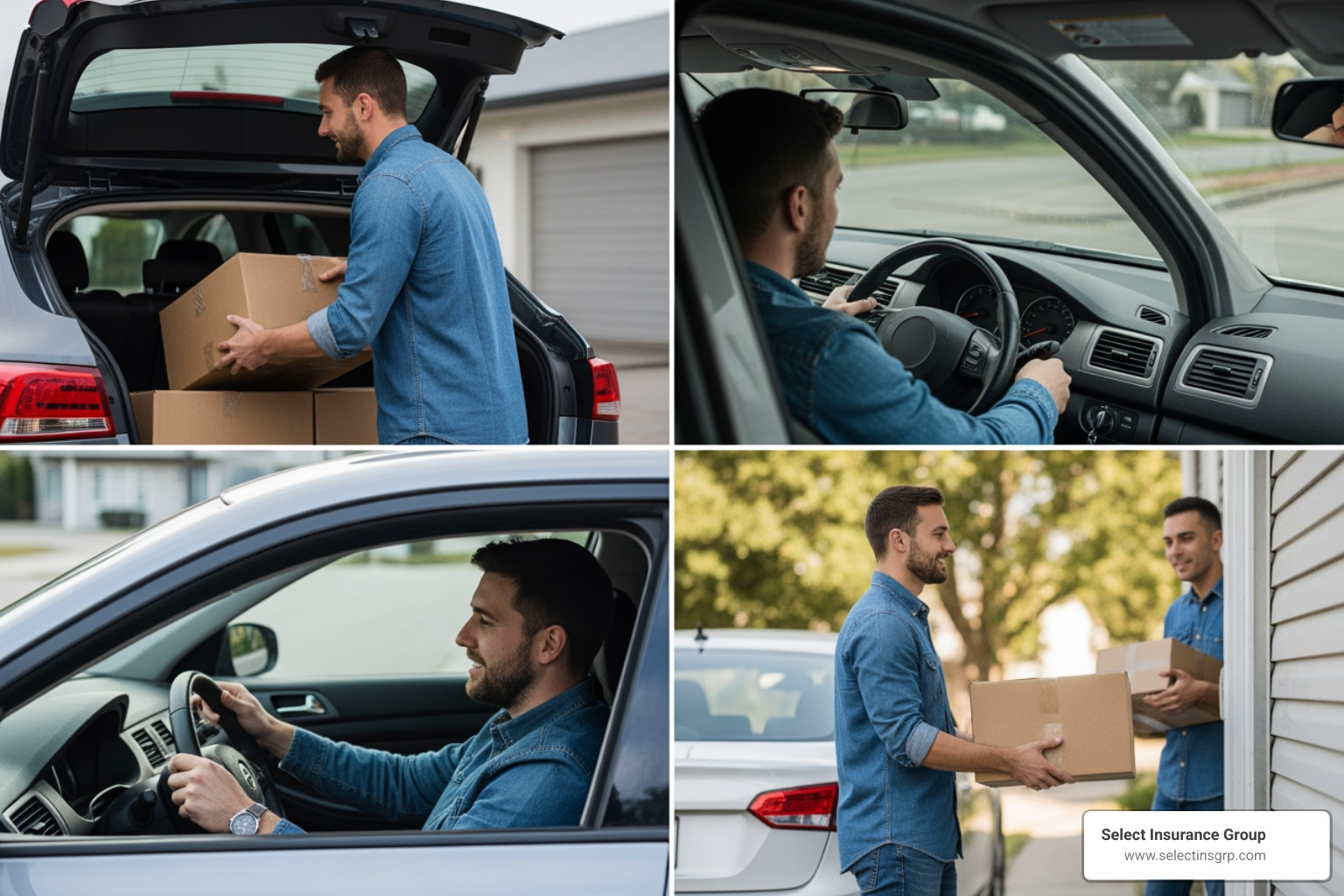
Whether it is for personal reasons or connected with business operations, the use of vehicles not registered in your name or your company’s name creates unique exposures. These are real-world use cases where non-owned auto coverage, or its business equivalent Hired and Non-Owned Auto (HNOA), is especially important.
Personal Use Scenarios
Many people occasionally drive a car that is not their own. Common personal situations where non-owned auto coverage can be valuable include:
- Renting a car for vacation.
- Borrowing a friend’s truck.
- Using car-sharing services.
- Test-driving a vehicle from a dealer.
Business Use Scenarios
Business use can significantly increase risk. Many organizations do not own a fleet, yet employees regularly use personal cars for work. Examples include:
- Employee errands such as going to the bank or post office in a personal vehicle.
- Sales calls in personal vehicles.
- Renting a vehicle for a business trip.
- Food delivery or other gig-economy work performed with a personal car.
In these situations, HNOA coverage can help protect the business when accidents involve non-owned vehicles.
The High Cost of a Gap in Your Liability for Damage to Non Owned Automobile
Overlooking liability for damage to non owned automobile exposures can create significant financial risk for both individuals and businesses. Consequences can extend beyond simple vehicle repairs to lawsuits, large out-of-pocket costs, and reputational harm for organizations.
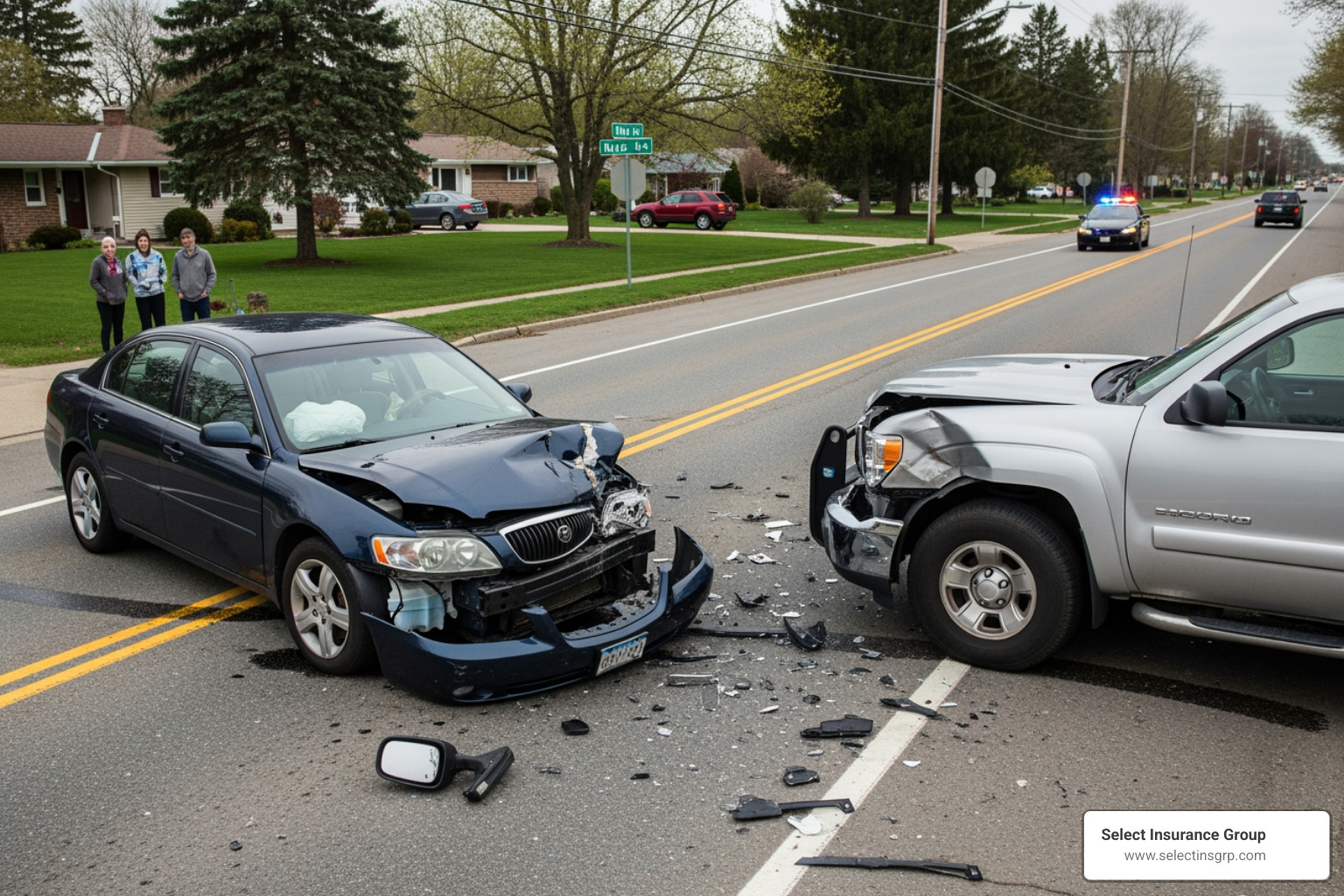
Plaintiff attorneys frequently pursue businesses when accidents involve non-owned vehicles. If an employee causes a serious accident while using a personal car for work, legal action can target both the employee and the employer. Hired or Non-Owned Auto (HNOA) liability is consistently ranked as a major risk for many organizations, yet it is sometimes underestimated.
When personal insurance limits are insufficient, or if a claim is denied due to business use exclusions, the financial burden can grow quickly. Businesses may face substantial damages, legal fees, and settlement costs if they have not addressed this exposure in advance.
The Role of Personal Auto Insurance
Assumptions about whose insurance applies can be misleading. While every situation is fact-specific and policy terms vary, several patterns are common:
- A driver’s personal auto liability coverage is often the first line of defense for bodily injury or property damage to others.
- If damages exceed the driver’s personal policy limits, the driver may be personally responsible for the shortfall.
- Many personal auto policies contain clauses that restrict or exclude certain types of business use, which can result in a denied claim when a vehicle is being used for work.
Business Liability and ‘Negligent Entrustment’
For businesses, the legal concept of “negligent entrustment” can complicate matters. An employer may face allegations that it allowed an individual with a poor driving record to operate a vehicle for business purposes. If that person then causes an accident, the employer can be sued for its own alleged negligence in addition to any vicarious liability.
This makes it important for employers to understand who is driving on their behalf, to review Motor Vehicle Records (MVRs) where appropriate, and to maintain clear standards for employees who drive for work.
Best Practices for Managing Non-Owned Vehicle Risk
Given the risks associated with liability for damage to non owned automobile, proactive risk management benefits both individuals and businesses. Reviewing coverage, setting clear expectations, and keeping documentation up to date can reduce the chance of an uninsured loss.
For Individuals
For individual drivers, it is important to understand how your own policy responds when you drive a vehicle you do not own:
- Review your policy for endorsements such as OPCF 27 (in Canada) or similar non-owner coverage in your region.
- Read rental agreements carefully so you know what is and is not covered.
- If you frequently drive vehicles owned by others, ask your broker or agent whether additional coverage is appropriate.
For Businesses
For businesses, managing non-owned vehicle risk usually requires a structured approach:
- Implement a formal vehicle use policy that addresses personal and rented vehicles used for work.
- Require proof of insurance from employees who use personal vehicles for business purposes.
- Set minimum liability limits that employees must carry on their personal auto policies.
- Conduct periodic MVR checks for employees who drive on company business.
- Add HNOA coverage to your commercial policy where available. Hired auto coverage addresses rented, leased, or borrowed vehicles, and non-owned auto coverage addresses employee-owned vehicles used for business.
You can learn more about business auto insurance and how it can help protect your company from these exposures.
Frequently Asked Questions about Non-Owned Auto Liability
This section addresses common questions about liability for damage to non owned automobile and how coverage typically applies. Always review your own policy documents and speak with a licensed professional about your specific situation.
Does my personal car insurance cover me when I rent a car?
Personal auto insurance often extends liability coverage (for injuries or property damage you cause to others) when you rent a car. However, physical damage to the rental car itself may require either a specific endorsement (such as OPCF 27 in Canada) or collision/comprehensive coverage on your personal policy that explicitly applies to non-owned autos. It is important to verify this with your insurance provider before you rent, as rental company coverage can be limited.
If my employee has an accident in their own car on company time, whose insurance pays?
In many cases, the employee’s personal auto insurance is the primary policy to respond to liability claims from third parties. If limits are exhausted or if coverage is restricted by policy terms, a claimant may also pursue the business. Hired and Non-Owned Auto (HNOA) coverage is designed to help protect the business when eligible accidents involve non-owned vehicles used for work.
Is non-owned auto coverage expensive to add to a business policy?
Hired and Non-Owned Auto (HNOA) coverage is often available as an endorsement to a commercial general liability or business auto policy. For many businesses, the cost is relatively modest when compared with the potential expense of a major claim or lawsuit arising from an accident involving a non-owned vehicle.
Securing Your Peace of Mind
Understanding liability for damage to non owned automobile is an important part of responsible driving and risk management. From the Canadian OPCF 27 endorsement to broader Hired and Non-Owned Auto (HNOA) concepts, the central idea is the same: when you or your employees drive vehicles you do not own, it is important to know how insurance will respond.
Key considerations include how your personal policy treats non-owned vehicles, whether there are gaps related to physical damage or business use, and how employer responsibilities such as reviewing driving records can affect potential liability.
At Select Insurance Group, we draw on more than 30 years of experience to help individuals and businesses evaluate these exposures and explore coverage options. We work with over 40 carriers to find competitive rates and service that supports long-term client relationships.
Review your current insurance policies and consider whether they address liability for damage to non owned automobile in the ways that matter for your situation. If you have questions or would like assistance assessing your coverage, you can connect with our team for guidance.