
Why Commercial Truck Insurance is Critical for Your Business
Commercial truck insurance is specialized coverage that protects trucking businesses from the financial risks of operating large vehicles. It’s legally required for most commercial trucking operations and provides essential protection against liability, cargo damage, and vehicle repairs.
Key things to know about commercial truck insurance:
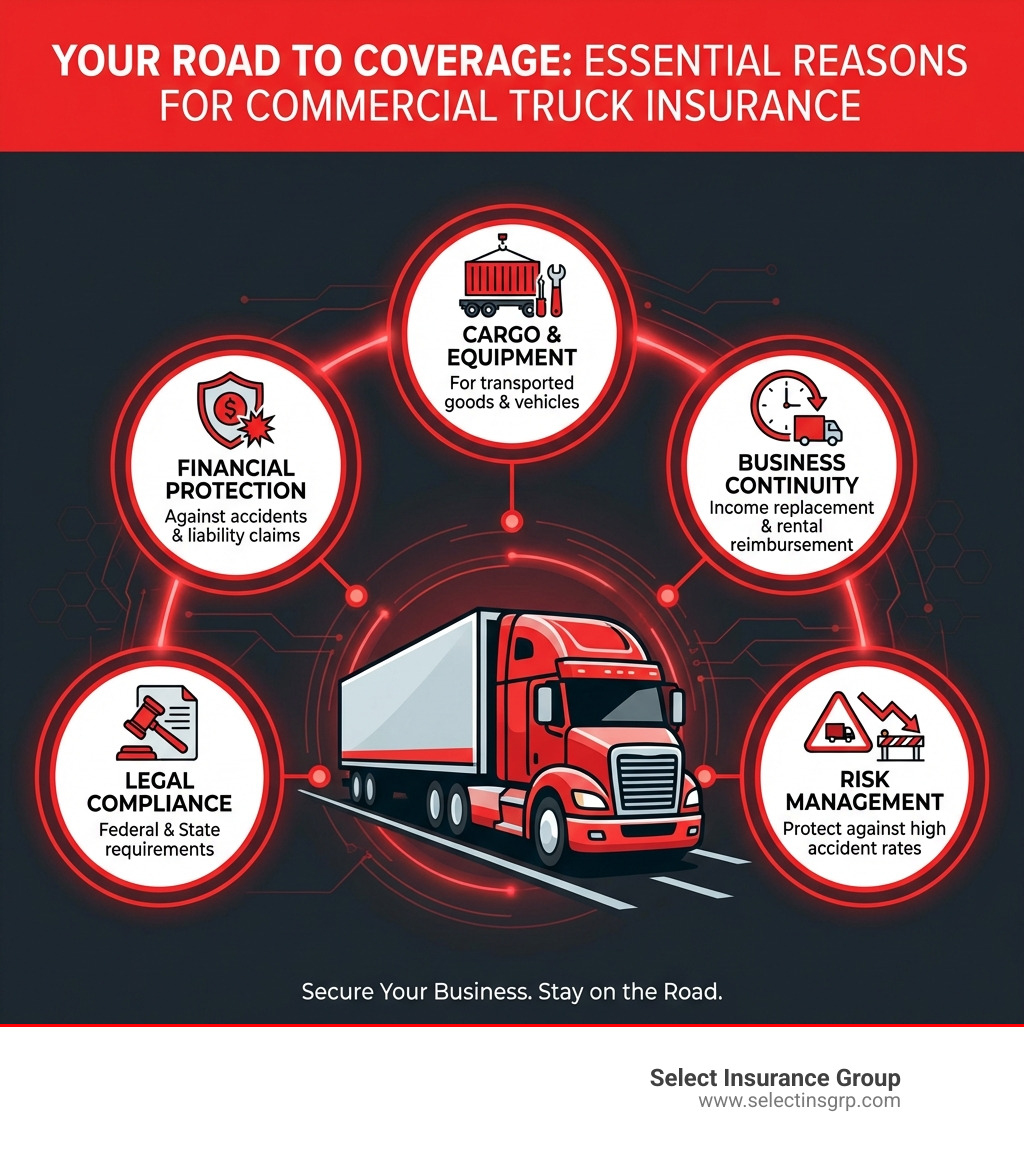
- Legal requirement – Federal law mandates minimum liability coverage of $750,000 for most trucks, with higher amounts ($1M-$5M) for hazardous materials.
- Core coverage types – Includes liability, physical damage, and cargo insurance, with optional add-ons like rental reimbursement and roadside assistance.
- Cost factors – Average premiums range from $767-$1,041 per month per vehicle, influenced by truck type, driving records, cargo, and operating radius.
- Who needs it – Owner-operators, motor carriers, fleet owners, and anyone using trucks for business purposes.
The numbers tell a stark story. With around 72% of the nation’s freight moving by truck, truckers travel about 331 billion miles annually. This high mileage comes with significant risk. In 2022 alone, almost 6,000 large trucks were involved in fatal crashes, and over 120,000 were involved in injury-causing crashes. These statistics highlight a harsh reality: a single accident can be financially devastating. Without proper insurance, the costs of injuries, property damage, and legal fees can easily put a company out of business.
As D.J. Hearsey, founder and CEO of Select Insurance Group, I’ve used my three decades of industry expertise to help countless trucking businesses find protective, affordable coverage. In this guide, we’ll walk you through everything you need to know to secure the right commercial truck insurance at the best possible price.
Commercial truck insurance vocab explained:
Understanding the Essentials of Commercial Truck Insurance
At its core, commercial truck insurance is a specialized policy designed for the unique risks of the trucking industry. It safeguards the entire business operation, not just the vehicle. Beyond being a legal requirement, it’s a fundamental part of risk management. The size and weight of commercial trucks mean accidents can cause significant damage and injuries. Proper insurance provides a financial safety net, covering legal costs, medical expenses, and property damage. It can also cover your own truck and cargo, ensuring business continuity after an incident and providing peace of mind.
Who Needs Commercial Truck Insurance?
Anyone who uses a truck for business purposes needs this coverage. The key differentiator is commercial use—if your truck is used to make money, personal auto insurance is not sufficient. This includes:
- Owner-operators: Whether operating under your own authority or leased to a motor carrier. We offer specialized Owner Operator Semi Truck Insurance solutions.
- Motor carriers: Companies transporting goods or people for compensation.
- Private carriers: Businesses that transport their own goods or equipment.
- Fleet owners: Businesses with multiple commercial trucks.
- For-hire truckers: Anyone contracted to transport goods for others.
- Specific businesses: Movers, haulers, food truck operators, landscapers, and delivery services.
Commercial Truck vs. Personal Auto Insurance
It’s a common misconception that personal auto insurance extends to a work truck. Commercial truck insurance is fundamentally different from personal auto insurance.
Here’s a quick comparison:
| Feature | Personal Auto Insurance | Commercial Truck Insurance |
|---|---|---|
| Primary Use | Personal transportation, commuting, leisure | Business operations, hauling goods, generating revenue |
| Liability Limits | Lower, typically sufficient for personal vehicle accidents | Significantly higher, reflecting greater risk and potential damage |
| Vehicle Types Covered | Cars, SUVs, light-duty trucks for personal use | Heavy-duty trucks, semi-trucks, box trucks, specialty vehicles |
| Cargo Coverage | Generally none, or very limited personal property coverage | Specific coverage for goods being transported |
| Driver Coverage | Named drivers, family members | Employees, owner-operators, contract drivers |
| Regulatory Oversight | State-specific personal auto laws | Federal (FMCSA) and state commercial regulations |
| Coverage Scope | Focuses on personal injury/property damage, own vehicle | Broader, includes business interruption, cargo, specialized risks |
The most significant difference is business use vs. personal use. Personal policies will deny claims if the vehicle was used for commercial purposes. Commercial truck insurance also has much higher liability limits to cover the greater potential for damage and lawsuits. It’s designed for specific vehicle types like semi-trucks and tankers, and it includes crucial coverage for cargo, which personal policies lack. We can help you understand these differences and find the right protection, whether you need Truck Car Insurance for a business fleet or a single commercial vehicle.
Decoding Your Coverage Options

Commercial truck insurance policies are highly customizable. Think of it as building your ideal truck: you start with a foundation of core coverages and add optional endorsements for specialized protection. Bundling policies, such as liability, physical damage, and cargo insurance, with a single provider can simplify management and often lead to cost savings.
Let’s break down the core coverages and essential options.
Primary Liability and Other Liability Coverages
Liability is the foundation of any policy, protecting you financially if your truck causes injury or damage to others.
- Primary Liability Insurance: This is federally mandated coverage. It pays for bodily injury and property damage to others if you are at fault in an accident. The FMCSA requires at least $750,000 for most trucks, with higher limits for certain cargo.
- Non-Trucking Liability (NTL): For owner-operators leased to a motor carrier, NTL provides coverage when using the truck for personal, non-business reasons while not under dispatch.
- Bobtail Insurance: This covers your truck when it’s operating without a trailer, whether or not it’s under dispatch. It’s often confused with NTL but covers a different scenario.
- Hired & Non-Owned Auto Liability: This protects your business from liability claims arising from accidents involving vehicles you rent or lease (hired) or when employees use their personal vehicles for business (non-owned).
We specialize in securing robust Truck Liability Coverage custom to your operational needs.
Physical Damage and Equipment Protection
This coverage protects your most valuable asset: your truck and trailer.
- Collision Coverage: This pays to repair or replace your truck if it’s damaged in a collision with another vehicle or object.
- Comprehensive Coverage: This protects against non-collision incidents like theft, vandalism, fire, natural disasters, or hitting an animal.
- Trailer Interchange Insurance: Essential for truckers who haul trailers they don’t own under a written interchange agreement. It covers physical damage to the non-owned trailer.
- Non-Owned Trailer Physical Damage: This covers damage to a non-owned trailer you’re hauling without a formal interchange agreement.
- Heavy Truck Roadside Assistance: This provides crucial services like towing, fuel delivery, and tire changes to minimize downtime.
Cargo and Freight Coverage
Protecting the goods you transport is paramount.
- Motor Truck Cargo Insurance: This covers the loss of or damage to the freight you are hauling due to perils like collision, fire, or theft. It can also cover spoilage if specified.
- Contingent Cargo Insurance: This is a secondary layer of protection, often used by freight brokers. It can step in if the primary carrier’s cargo policy fails to cover a loss.
We understand your cargo is your livelihood and can help you find robust Cargo Insurance for Truckers that provides peace of mind.
Navigating Insurance Requirements and Costs
Understanding commercial truck insurance requirements and costs is complex. Premiums vary based on a mix of federal mandates, state laws, and factors unique to your business. The goal is to find the right coverage that keeps you compliant and protected without overspending.
Federal and State Minimum Requirements
The trucking industry is heavily regulated to ensure financial responsibility.
- Federal Motor Carrier Safety Administration (FMCSA) Regulations: The FMCSA sets minimum insurance requirements for interstate trucking. Most trucks carrying non-hazardous cargo require at least $750,000 in liability coverage. This minimum increases to $1,000,000 for oil transport and up to $5,000,000 for other hazardous materials. These requirements are detailed in the Federal Motor Carrier Safety Administration (FMCSA) regulations.
- State-Specific Limits: States often have their own minimums for intrastate trucking, which may differ from federal rules. We can help you steer requirements in South Carolina Business Auto, Virginia Business Auto, Georgia Business Auto, North Carolina Business Auto, or Florida Business Auto.
- Insurance Filings (BMC-91, MCS-90): The FMCSA requires proof of insurance through filings. The BMC-91 or BMC-91X form proves you have sufficient liability coverage. The MCS-90 is an endorsement for carriers of hazardous cargo, guaranteeing funds for public liability and environmental cleanup.
What Determines the Cost of Your Commercial Truck Insurance?
The average cost of commercial truck insurance ranges from $767 to $1,041 per month per vehicle, but your premium will depend on many factors. We leverage our access to over 40 carriers to find you the most competitive rates. For a deeper dive, check our page on Average Truck Insurance Cost.
Key factors influencing your premium include:
- Vehicle Type and Age: Larger, more expensive trucks cost more to insure.
- Driving Records: Clean records for all drivers lead to lower premiums.
- Operating Radius: Local routes are typically cheaper to insure than long-haul routes.
- Cargo Type: Hauling hazardous or high-value goods increases insurance costs.
- Coverage Limits and Deductibles: Higher limits increase premiums, while higher deductibles lower them.
- Claims History: A history of frequent claims will raise your rates.
- Business Experience: New businesses often pay more than established ones with good safety records.
- Location: Operating in high-risk areas can increase costs.
- Safety Programs: Using telematics and implementing driver training can earn you discounts.
Your Guide to Securing the Best Policy
Finding the right commercial truck insurance is about securing comprehensive protection at a competitive price. At Select Insurance Group, we use our 30+ years of experience and access to over 40 carriers to find you the best value and tailor a policy to your needs.
How to Lower Your Commercial Truck Insurance Premiums
There are proactive steps you can take to reduce your premiums:
- Implement Driver Safety Programs: Ongoing training and defensive driving courses reduce accidents and signal a commitment to safety to insurers.
- Use Telematics and ELDs: Devices that monitor driving behavior can promote safety and earn you discounts.
- Choose Higher Deductibles: If you can afford a larger out-of-pocket expense, a higher deductible will lower your premium.
- Pay in Full: Paying your annual premium upfront often comes with a discount.
- Bundle Policies: Combining multiple policies with one carrier can lead to savings. We can help explore options in Virginia Commercial Insurance, Georgia Commercial Insurance, North Carolina Commercial Insurance, Florida Commercial Insurance, and South Carolina Commercial Insurance.
- Maintain a Good Driving Record: A clean record for all drivers is the most effective way to keep premiums low.
- Hire Experienced Drivers: Drivers with a proven safety record are seen as lower risk.
- Regular Vehicle Maintenance: Well-maintained trucks are less prone to accidents and breakdowns.
Steps to Choosing the Right Policy
Selecting the right policy requires a methodical approach:
- Assess Your Needs Thoroughly: Understand your cargo, operating radius, and state/federal requirements.
- Compare Quotes from Multiple Carriers: As an independent agency, we shop over 40 carriers on your behalf to find the best price and fit.
- Evaluate Insurer’s Financial Strength: Choose an insurer with strong financial ratings to ensure they can pay claims.
- Check Customer Service Reviews: Research an insurer’s reputation for claims handling and responsiveness.
- Understand Policy Details and Exclusions: Read the fine print to know what is and isn’t covered.
- Work with an Experienced Agent: An expert agent, like us at Select Insurance Group, can help you identify risks and find the best solutions.
Common Policy Exclusions to Be Aware Of
Even comprehensive policies have exclusions. Be aware of common ones:
- Unlisted Drivers: Claims may be denied if the driver isn’t listed on the policy.
- Intentional Acts: Deliberate damage or illegal activities are not covered.
- Normal Wear and Tear: Routine maintenance and age-related breakdowns are excluded.
- Specific Cargo Types: Some cargo may require special endorsements.
- Geographic Limitations: Operating outside your defined territory can void coverage.
- Unreported Vehicle Modifications: Significant, unreported changes to your truck can lead to denied claims.
- Racing: Using a commercial truck for racing is excluded.
- Workers’ Compensation: Employee injuries are covered by a separate workers’ comp policy.
- Mobile Equipment: Specialized equipment may need separate coverage.
Frequently Asked Questions about Commercial Truck Insurance
We often encounter similar questions from truck owners and operators. Here are some of the most common ones we address:
What is the difference between primary liability and non-trucking liability?
Primary liability insurance is federally mandated coverage for when you are operating under dispatch (i.e., working). It covers bodily injury and property damage to others in an at-fault accident.
Non-trucking liability (NTL) provides coverage when you use your truck for personal, non-business reasons while not under dispatch, like running personal errands. It’s crucial to have both for continuous coverage.
What insurance filings are required for trucking companies?
The FMCSA requires proof of financial responsibility through specific insurance filings:
- BMC-91 (or BMC-91X): A federal filing submitted to the FMCSA that proves you have the required primary liability insurance.
- MCS-90: An endorsement attached to your policy, required for carriers of hazardous materials. It guarantees coverage for public liability and environmental restitution, protecting the public in case of an accident.
These filings are essential for legal interstate operation.
How do telematics and driver safety programs affect insurance?
Insurers often provide discounts for businesses that use telematics and implement safety programs because they reduce risk.
- Telematics: Devices like ELDs and dashcams provide data on driving behavior (speed, braking, etc.). This data helps insurers assess risk, and safe driving practices can lead to lower premiums. Dashcam footage can also be crucial for claims.
- Driver Safety Programs: Formal programs with regular training and safety meetings show a commitment to risk reduction, which insurers view favorably.
Promoting safer driving through these methods helps lower your accident rates and, in turn, your commercial truck insurance premiums.
Conclusion
The road ahead for trucking businesses is full of opportunity, but also risk. Commercial truck insurance is not just a regulatory requirement; it’s a critical investment that protects your assets, livelihood, and peace of mind. A robust policy, custom to your specific needs, is the foundation of a successful business.
While costs are influenced by many factors, you can lower your premiums through proactive safety programs, telematics, and smart coverage choices. A one-size-fits-all policy is rarely sufficient. At Select Insurance Group, we use our 30+ years of experience and network of over 40 carriers to find the perfect blend of coverage and affordability for your business in Florida, the Carolinas, and Virginia. We simplify the complex and provide superior customer service.
Don’t let the complexities of commercial truck insurance leave your business vulnerable. Partner with us to secure the comprehensive protection you deserve.
Get your personalized commercial insurance quote in North Carolina today