Why Non-Owner Car Insurance Matters for Drivers Without a Vehicle
How to get non owners auto insurance is straightforward: contact an insurance agent or company directly (it’s not available online), provide your driver’s license number and driving history, compare quotes from 3-5 providers, and purchase the policy that fits your needs. You’ll receive proof of insurance almost immediately, often by email.
Quick Steps to Get Non-Owner Car Insurance:
- Gather your information – Driver’s license number, driving history, and payment method
- Contact insurance agents – Reach out to 3-5 companies directly by phone or in person
- Compare quotes – Review coverage limits and prices from each provider
- Purchase your policy – Make payment and receive immediate proof of coverage
- File SR-22 if needed – Your insurer can submit required state forms on your behalf
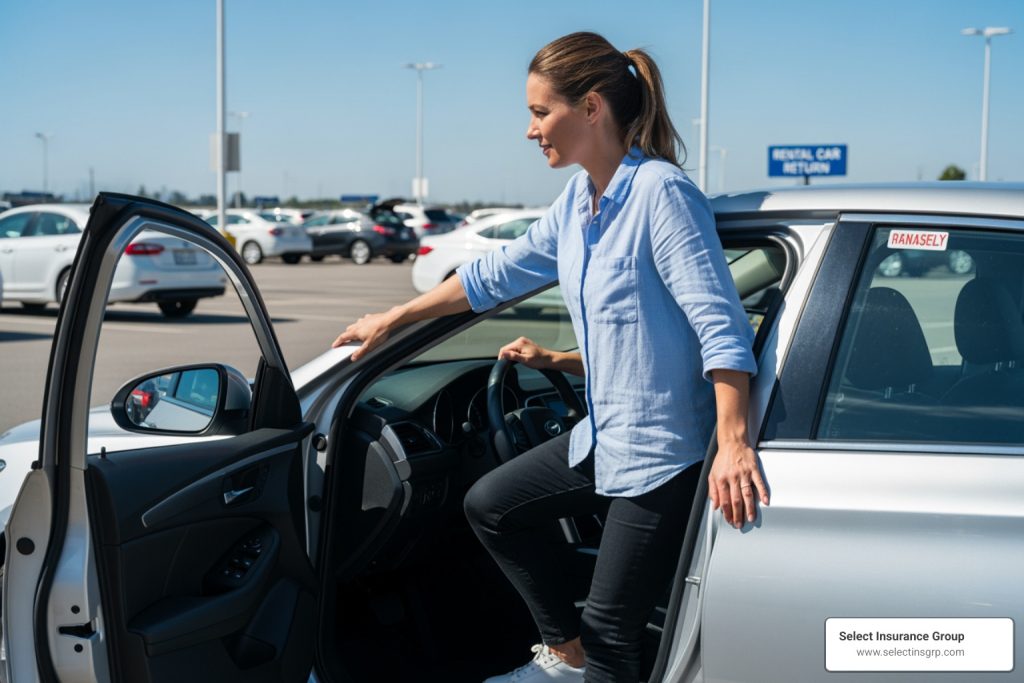
Just because you don’t have a car doesn’t mean you don’t need car insurance. If you frequently borrow a friend’s car, rent vehicles for weekend trips, or use car-sharing services, you could face serious financial risk without the right coverage. When you drive someone else’s car and cause an accident, their insurance covers you first—but what happens when the damages exceed their policy limits? That’s where non-owner car insurance steps in.
This type of policy provides liability protection that kicks in after the vehicle owner’s coverage is exhausted. It’s also essential for drivers who need to maintain continuous insurance history, fulfill SR-22 requirements for license reinstatement, or simply want peace of mind when driving vehicles they don’t own.
The challenge? Non-owner insurance isn’t advertised like traditional auto policies, and you can’t buy it online. Most people don’t even know it exists until they need it. But getting covered is simpler than you might think once you understand the process.
As D.J. Hearsey, founder of Select Insurance Group with operations across the Southeast, I’ve helped countless drivers steer how to get non owners auto insurance when they thought traditional coverage wasn’t an option. Whether you’re between vehicles, rely on rentals, or need to satisfy state requirements without owning a car, the right non-owner policy can protect you from significant financial liability.
Simple how to get non owners auto insurance glossary:
- getting liability insurance without a car
- getting sr22 insurance without a car
- non driver on car insurance
What is Non-Owner Car Insurance and Who Needs It?
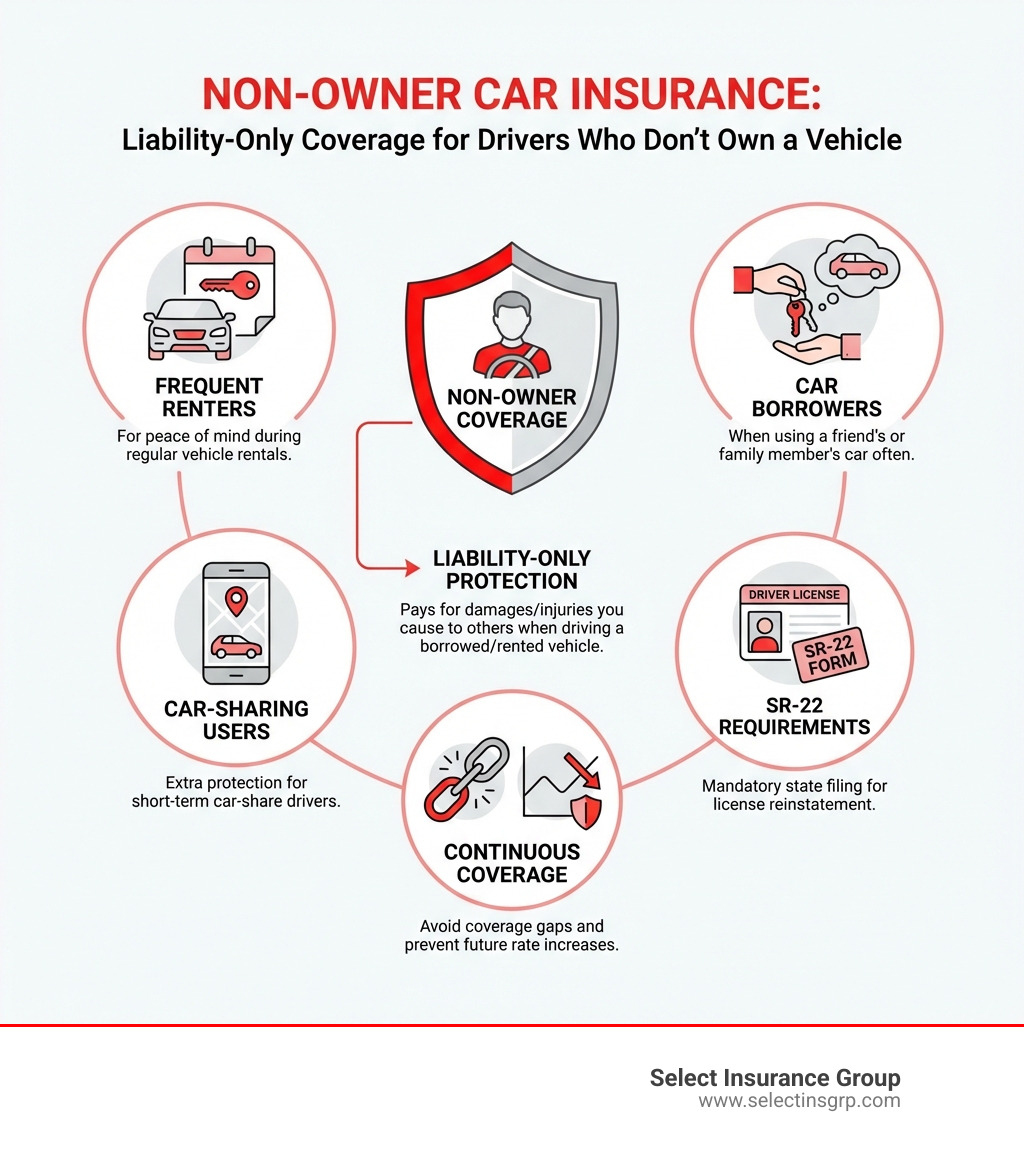
Non-owner car insurance is a policy that covers you as a driver, rather than a specific vehicle. Unlike standard auto insurance, it follows you regardless of whose car you’re driving. It provides secondary liability coverage, which means it kicks in after the vehicle owner’s primary insurance is exhausted.
This policy primarily covers liability, paying for damages you cause to others in an at-fault accident, including bodily injury liability (for injuries) and property damage liability (for property). If the car owner’s policy limits aren’t enough to cover all the damages, your non-owner policy provides an extra layer of financial protection, preventing you from being held personally responsible for the remaining costs. It’s personal liability coverage for your driving activities, ensuring you’re a responsible driver even without owning a car.
To dive deeper into this concept, you might want to read our article: Is There Such Thing As A Non-Owner Auto Insurance?
Who Should Consider a Non-Owner Policy?
This specialized coverage is a smart choice in several situations:
- Frequent Renters: If you often rent cars, a non-owner policy provides liability coverage, which can be cheaper than buying the rental company’s insurance each time.
- Frequent Borrowers: If you regularly borrow cars from friends or family, this policy ensures you’re protected if you cause an accident and the owner’s insurance isn’t sufficient.
- Car-Sharing Users: For users of services like Zipcar or Turo, a non-owner policy can offer additional liability protection beyond the basic coverage provided by these companies.
- SR-22/FR-44 Requirement: If your license was suspended, your state may require you to file an SR-22 or FR-44 to reinstate it. A non-owner policy is often the easiest way to meet this requirement if you don’t own a car. For more details, see our guide on Getting SR22 Insurance Without a Car.
- Avoiding Coverage Lapse: If you’re between vehicles, maintaining a non-owner policy prevents a “lapse in coverage.” This helps you avoid higher premiums when you buy a car later, as insurers view continuous coverage favorably.
When is Non-Owner Car Insurance Not Necessary?
You likely don’t need a non-owner policy in these cases:
- You Own a Vehicle: Your standard auto insurance policy already provides liability coverage when you occasionally drive other cars.
- You Regularly Drive a Household Member’s Car: You should be listed as a driver on their policy, as insurers expect all licensed drivers in a household to be covered. A non-owner policy is not a substitute.
- Occasional Permissive Use: If you only borrow a car once or twice a year, the owner’s policy typically covers you under “permissive use.”
- Company Car for Business Use: Your employer’s commercial auto policy should cover you when driving a company car for business purposes.
- You Rarely or Never Drive: If you drive very infrequently and don’t need an SR-22, the cost may not be justified.
If you’re still wondering whether you truly need insurance without owning a car, our article Getting Insurance Without a Car provides further clarity.
How to Get Non-Owners Auto Insurance: A Step-by-Step Guide
Getting a non-owner policy is different from buying standard insurance, as you typically can’t purchase it online. It requires a more direct approach, but it’s straightforward once you know the steps.

Step 1: Gather Your Information
To make the process fast and smooth, have these details ready:
- Driver’s License Number: A valid license is required.
- Driving History: Be prepared to share your record of accidents or violations.
- Payment Method: You’ll need a credit or debit card to make the initial payment.
- State Notification Number for SR-22 (if applicable): If you need an SR-22 or FR-44, provide the case number from your state’s DMV or court.
Step 2: Contact Insurance Agents or Companies
Since you can’t buy non-owner insurance online, you’ll need to speak directly with a provider.
- Independent Agents: This is often the best route. Agents like us at Select Insurance Group work with multiple carriers, allowing us to shop around and find the best rates and coverage for you.
- Direct Carriers: You can also call major insurance companies directly. Be sure to specifically ask for a “non-owner car insurance policy,” as it’s not always advertised.
- Specialty Insurers: If you have a poor driving record or need an SR-22, insurers specializing in high-risk drivers may be a good option.
When you call, state that you need a “non-owner car insurance policy.” For more on local options, see our Auto Insurance Agents in Orlando FL page.
For more insights into the purchasing process, you can refer to our article: How to buy non-owner car insurance.
Step 3: Compare Quotes and Purchase Your Policy
After contacting several providers, you’ll receive quotes.
- Compare 3-5 Quotes: Don’t take the first offer. Compare premiums and coverage limits to find the best value.
- Review Coverage Limits: Ensure the liability limits are adequate. We often recommend higher limits than the state minimum for better protection.
- Make Payment: Select your policy and make the first payment to bind coverage.
- Receive Proof of Insurance: You’ll get proof of insurance almost immediately, usually by email, which is crucial for license reinstatement or car rentals.
Ready to get started? We make it easy to compare quotes and find the right non-owner policy for you. Get A Quote today!
Understanding Your Coverage and Costs
Understanding what a non-owner policy covers and what it costs is key to smart financial planning.
What a Non-Owner Policy Typically Covers (and What It Doesn’t)
The core of a non-owner policy is liability coverage for accidents you cause while driving a car you don’t own.
What it usually covers:
- Bodily Injury Liability: Pays for medical expenses and lost wages for others injured in an accident.
- Property Damage Liability: Covers repairs to other people’s property, like their car or a fence.
- Optional Coverages: Some policies may offer Medical Payments (MedPay), Personal Injury Protection (PIP), or Uninsured/Underinsured Motorist (UM/UIM) coverage.
What it does NOT cover:
- Damage to the car you’re driving: It does not include collision or comprehensive coverage, so it won’t pay for repairs to the borrowed or rented vehicle.
- Commercial use: It does not cover driving for rideshare or delivery services like Uber or Lyft.
For a comprehensive look at liability without owning a car, see our Getting Liability Insurance Without Car Guide.
How Much Does Non-Owner Insurance Cost?
The good news is that non-owner insurance is generally cheaper than a standard auto policy, with an average cost around $407 per year. Because you don’t own a car, insurers view you as a lower risk.
However, your exact premium depends on several factors:
- Driving Record: A clean record means lower rates.
- Age: Younger, less experienced drivers typically pay more.
- Location: Rates vary significantly by state and city.
- Coverage Limits: Higher limits provide more protection but cost more.
- Credit History: In many states, your credit score can affect your premium.
- Marital Status: Married drivers often receive slightly lower rates.
Even with these variables, we can help you find affordable options. For example, if you’re looking for Cheap Car Insurance Florida, we can explore non-owner policies that fit your budget.
State-Specific Tips for How to Get Non Owners Auto Insurance
Insurance rules and costs vary by state. Here are some quick tips for our service areas:
- Florida: The average non-owner policy is around $925 annually, but costs vary by city. Understanding the state’s minimum requirements is crucial. Our Minimum Auto Insurance Florida Guide can help.
- North Carolina: This state generally has competitive rates. Your county and driving history are key factors. Learn more on our North Carolina Auto Insurance page.
- South Carolina: The state requires minimum liability coverage of 25/50/25 and uninsured motorist coverage. A non-owner policy must meet these standards. See our South Carolina Auto Insurance page for details and the minimum coverage required in South Carolina.
- Virginia & Georgia: Both states have unique regulations. An experienced agent can help you steer the laws and find the right policy. Visit our Virginia Auto Insurance page for more information.
Working with an agent who understands state-specific requirements is the best way to secure the right policy.
Non-Owner Insurance vs. Permissive Use
Understanding the difference between non-owner car insurance and “permissive use” is crucial. While both relate to driving a car you don’t own, they cover different scenarios and levels of risk.
Permissive Use is a common feature in most standard auto insurance policies. It means that if the car’s owner gives you permission to drive their vehicle, their insurance policy will generally extend coverage to you as the driver. This is typically for occasional use. For example, if you borrow a friend’s car to run a quick errand, and you’re not on their policy, their insurance would usually cover you in case of an accident. The key here is “occasional” and “permission.”
However, permissive use has its limitations:
- Primary Coverage: The owner’s policy is always primary coverage. This means it pays first.
- Coverage Limits: If the damages from an accident you cause exceed the owner’s policy limits, you could be personally responsible for the remainder. This is where a non-owner policy would step in as secondary coverage.
- Regular Use: Permissive use is not intended for regular or frequent driving. If you regularly drive someone else’s car, you should be added to their policy as a named driver, especially if you live in the same household.
Non-Owner Car Insurance, on the other hand, is designed to be your personal liability coverage that travels with you. It acts as secondary coverage, filling the gaps that the vehicle owner’s policy might leave.
Here’s a quick comparison:
| Feature | Non-Owner Car Insurance | Permissive Use (Owner’s Policy) |
|---|---|---|
| Frequency of Use | Best for frequent renters or borrowers | For occasional, infrequent driving with permission |
| Cost | Separate premium, generally affordable | No direct cost to the driver (covered by owner’s premium) |
| Coverage Type | Your personal liability coverage; secondary to owner’s | Owner’s liability coverage extends to you; primary coverage |
| Physical Damage | Does NOT cover damage to the car you’re driving | May cover damage to the car you’re driving (if owner has comp/coll) |
| Ideal Scenario | Renting cars, borrowing frequently, SR-22/FR-44 needed | Infrequent borrowing from friends/family (not household members) |
| SR-22/FR-44 | Can fulfill this requirement | Cannot fulfill this requirement (it’s tied to your personal policy) |
If your driving habits are more than just “occasional permissive use,” or if you need to satisfy a legal requirement like an SR-22, a non-owner policy is a much more robust and reliable solution. It provides you with greater peace of mind and protection against significant financial exposure.
Frequently Asked Questions about Non-Owner Policies
Here are answers to some of the most common questions about non-owner car insurance.
Can I get non-owner car insurance if I need an SR-22?
Yes, absolutely. This is a primary reason people get this policy. An SR-22 (or FR-44 in some states like Florida and Virginia) is a certificate your insurer files with the state to prove you have liability coverage. If you don’t own a car but need an SR-22 for license reinstatement, a non-owner policy is often the only way to meet this requirement. Your insurer will file the form for you. For more specific details on this, please refer to our article: Getting SR22 Insurance Without a Car.
Does non-owner insurance cover rental cars?
Yes, but only for liability. Your non-owner policy provides liability coverage for injuries or property damage you cause to others while driving a rental. This can save you from buying the rental company’s expensive liability insurance.
However, it does not cover physical damage to the rental car itself (what a Collision Damage Waiver, or CDW, covers). For that, you’ll need to use coverage from a credit card that offers it or purchase the CDW from the rental agency. Always have a plan for physical damage coverage before you rent.
Key considerations for how to get non owners auto insurance if I live with the car owner?
If you live with someone and frequently drive their car, a non-owner policy is not the right solution. Insurers will likely deny your application.
Instead, you must be listed as a named driver on the car owner’s policy. Insurance companies require all licensed drivers in a household with regular access to a vehicle to be listed on that vehicle’s policy. Failing to do so could lead to a claim being denied. The best action is to speak with the car owner and have them add you to their policy. If you have questions about your specific situation, please Contact us. We can help clarify these rules.
Find the Right Non-Owner Policy for Your Needs
Navigating auto insurance, especially when you don’t own a car, can feel like a maze. But as we’ve seen, understanding how to get non owners auto insurance is a powerful step towards ensuring your financial security on the road. This specialized policy offers invaluable financial protection by providing liability coverage when you’re driving vehicles you don’t own, whether they’re rentals, borrowed cars, or car-share vehicles. It also serves as a crucial tool for maintaining continuous coverage and fulfilling state requirements like SR-22 filings.
At Select Insurance Group, we pride ourselves on being your trusted partner in this journey. With over 30 years of experience, we’ve built a reputation for clear communication, competitive rates, and superior customer service across Florida, the Carolinas, Virginia, and Georgia. We understand that every driver’s situation is unique, and a one-size-fits-all approach simply doesn’t work. That’s why we leverage our relationships with over 40 carriers to shop for the best non-owner policy custom precisely to your needs.
Don’t let the complexity of insurance leave you exposed. Whether you’re frequently renting, regularly borrowing, or simply need to maintain your insurance history without a personal vehicle, we’re here to provide the expert guidance you deserve. Our team will walk you through the process, answer all your questions, and help you compare options to find the perfect non-owner policy.
For comprehensive advice and to explore your options for non-owner car insurance, especially if you’re in the North Carolina area, we invite you to reach out. Get expert advice on your North Carolina auto insurance needs today. Let us help you drive with confidence, knowing you’re fully covered.