What You’ll Pay for Motorcycle Insurance
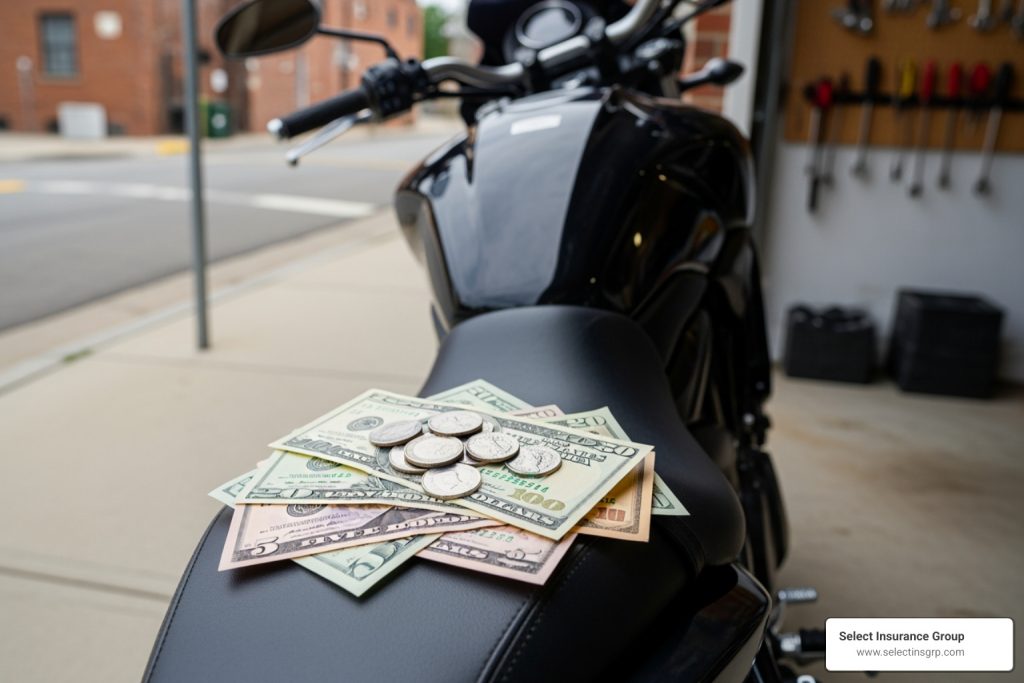
How much is motorcycle insurance? While it depends on many factors, here’s a quick look at what you can expect:
- National Average (Minimum Coverage): $12–$16 per month or $141–$192 per year
- National Average (Full Coverage): $23–$33 per month or $284–$399 per year
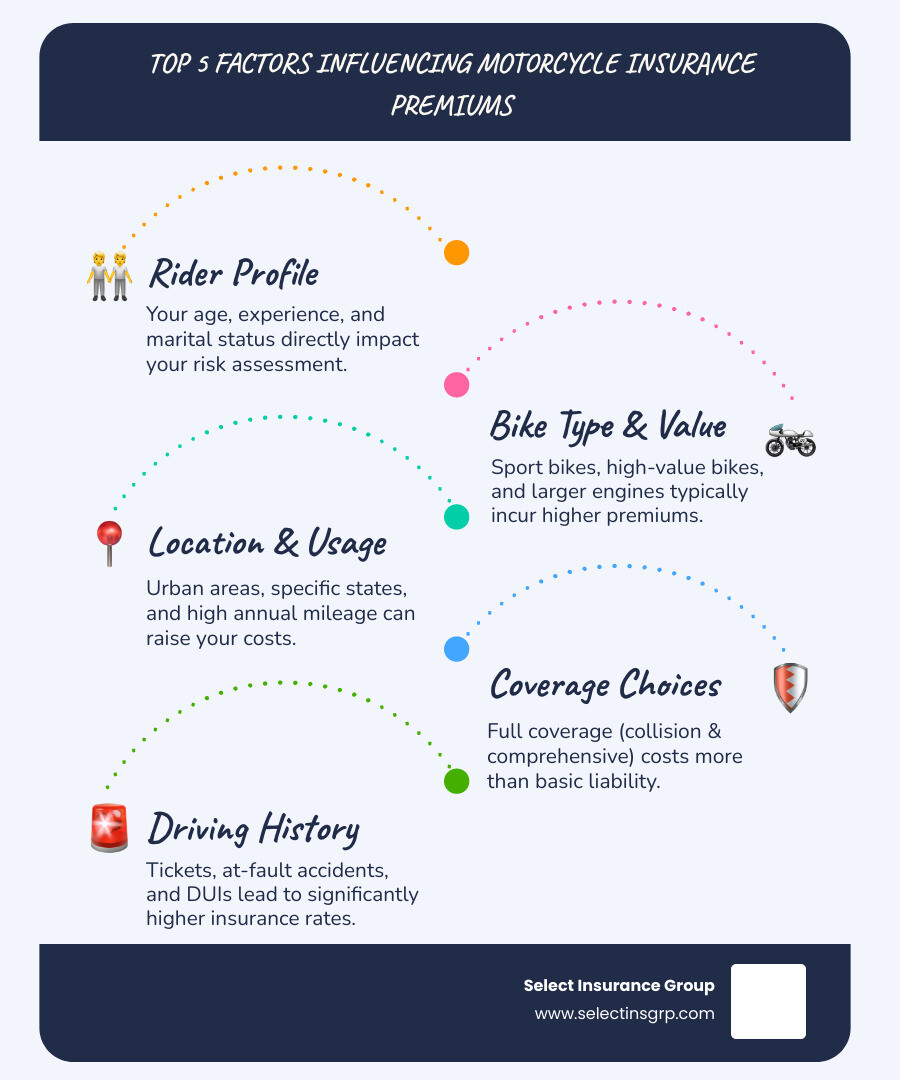
- Key Cost Factors: Your age, riding experience, location, bike type, driving record, and coverage choices
Motorcycle insurance is significantly cheaper than car insurance—often 59-76% less. However, rates vary wildly based on where you live and what you ride. For example, insuring a sport bike can cost over three times more than a cruiser, and a 16-year-old rider might pay double what a 35-year-old pays for the same coverage.
Understanding these cost drivers helps you make smarter choices and save money. As D.J. Hearsey, I’ve helped riders across Florida, Georgia, the Carolinas, and Virginia find affordable motorcycle insurance by shopping 20+ carriers. This guide will break down exactly how much is motorcycle insurance and show you how to get the best rate.
How much is motorcycle insurance terminology:
What Factors Determine How Much Motorcycle Insurance Is?
Insurance companies use dozens of data points to calculate your premium. Understanding these factors helps you see where you can save money on your policy.
Your Rider Profile
Your personal details tell insurers how likely you are to file a claim.
- Age and Experience: These are huge factors. A 16-year-old rider might pay $340 per month, while a 35-year-old with the same coverage could pay just $173. Insurers reward maturity and time on the road. Rates are lowest in middle age and may rise slightly for senior riders.
- Driving Record: A clean record saves you money. A single ticket can raise rates by 7% to 68%, with DUIs having the biggest impact. Most violations fall off your record after about three years.
- Marital Status: Married riders often pay around 22% less than single riders, as insurers view them as more stable and less likely to take risks.
- Credit Score: In most states, an excellent credit score (750+) can save you 30-40% compared to someone with poor credit (below 580). A better credit score leads to a lower insurance score, reducing your premium.
For more on risk factors, see the Facts + Statistics: Motorcycle Accidents from the Insurance Information Institute.
How much is motorcycle insurance for different bikes?
The bike you choose has a massive impact on your insurance costs.
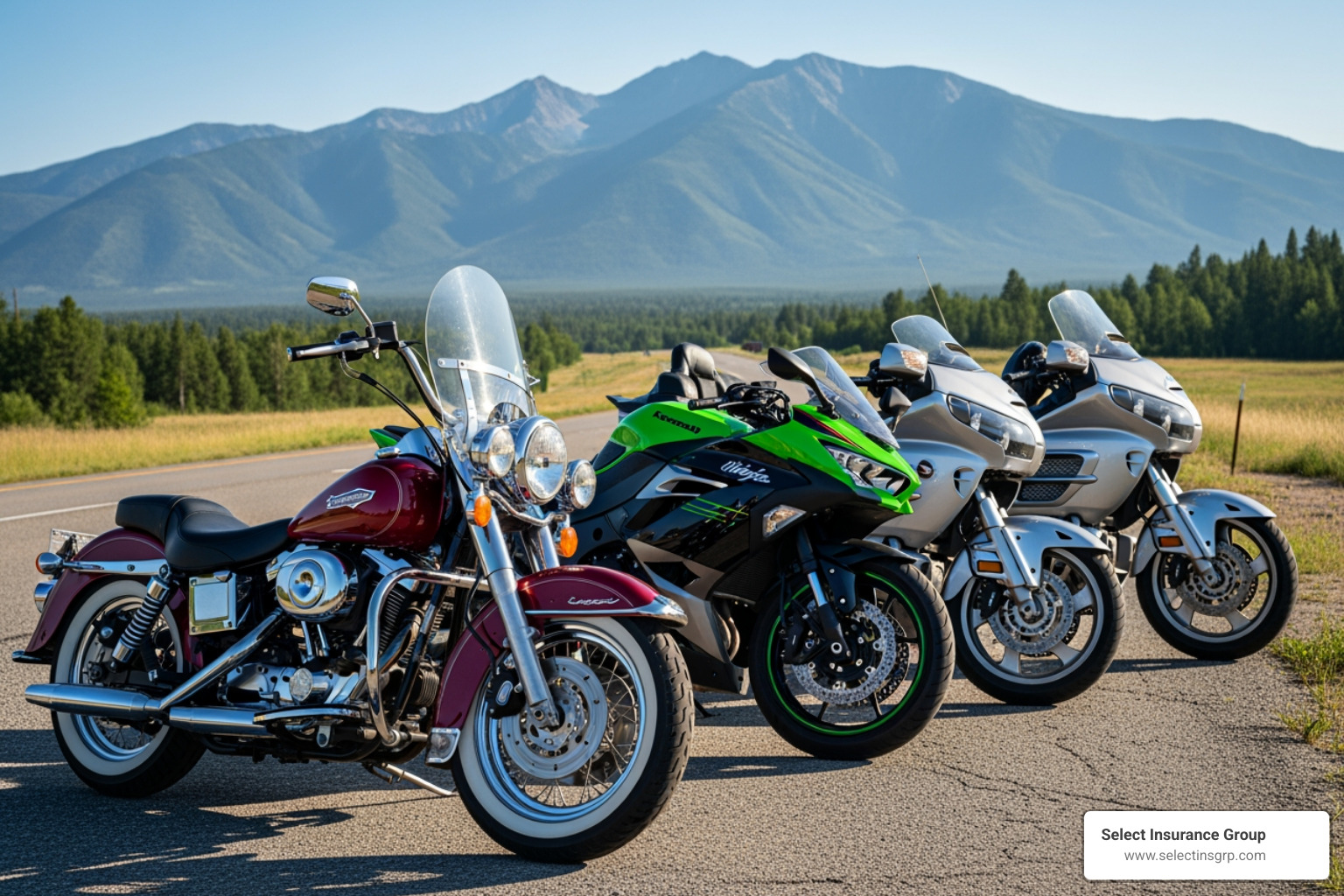
- Motorcycle Type: Sport bikes are the most expensive to insure, costing over 3.5 times more than cruisers. Their high performance, theft rates, and repair costs make them a bigger risk. Cruisers are typically the cheapest. Touring bikes fall in the middle, while mopeds, scooters, and standard bikes under 500cc are the most affordable.
- Engine Size: A 1000cc+ bike will almost always cost more to insure than a 250cc model. More power equals more risk.
- Value and Age: A new, expensive bike costs more to insure than an older, less valuable one. This directly affects your comprehensive and collision coverage costs.
- Theft Rates: If your specific model is stolen often, your comprehensive premium will be higher.
- Custom Parts: Accessories like a custom exhaust or paint job increase your bike’s value and your insurance cost. Standard policies include limited accessory coverage (usually a few thousand dollars), but you’ll need to purchase more for heavy modifications.
Location and Usage
Where and how often you ride are just as important as who you are and what you ride.
- Urban vs. Rural: City riders pay more than rural riders due to higher rates of traffic, accidents, theft, and vandalism.
- State-Specific Factors: Costs vary wildly by state due to different laws, population density, and accident rates. For example, New York is expensive ($305/month), while Georgia is much cheaper ($75/month). Warmer states like Florida often have higher rates due to year-round riding seasons. Each state also has different motorcycle laws.
- Annual Mileage: The more you ride, the more you pay. A daily commuter pays more than a weekend rider.
- Bike Usage: Using your bike for daily commuting is seen as higher risk than recreational use.
- Climate: Longer riding seasons in states like Florida or California mean more potential for claims, leading to higher premiums than in states with cold winters. This is one reason Florida motorcycle insurance can be more expensive.
Understanding Your Coverage Options and Their Cost Impact
Your coverage choices directly impact how much is motorcycle insurance costs. Think of it like building a policy: some parts are required, while others are optional add-ons for peace of mind.
Required vs. Optional Coverages
Every policy is built on a foundation of core coverages.
- Liability Coverage: Required in nearly every state, this covers injuries (Bodily Injury) and property damage (Property Damage) you cause to others. State minimums (e.g., 25/50/25 in South Carolina) are the cheapest option but may not be enough to cover a serious accident.
- Collision Coverage: Pays to repair your bike after a crash with another vehicle or object. Lenders usually require this if you have a loan.
- Comprehensive Coverage: Protects your bike from non-collision events like theft, vandalism, fire, or hitting a deer. This is also typically required by lenders and is highly recommended due to high motorcycle theft rates.
- Uninsured/Underinsured Motorist (UM/UIM): Your safety net if you’re hit by a driver with little or no insurance. It pays for your medical bills and repair costs when the at-fault party can’t.
- Medical Payments (MedPay) or Personal Injury Protection (PIP): Helps pay your and your passenger’s medical bills after an accident, regardless of fault. It’s a valuable addition, as motorcycle accidents can cause serious injuries.
Add-On Protections
Customize your policy with specialized add-ons for extra protection.
- Accessory Coverage: Protects custom parts and upgrades. Most policies include a base amount (e.g., $3,000), but you can purchase more for heavily modified bikes.
- Roadside Assistance: Covers towing, flat tires, battery jumps, and fuel delivery if you break down.
- Trip Interruption Coverage: Reimburses you for expenses like hotels and meals if your bike breaks down on a road trip far from home (e.g., up to $500 per incident).
- Total Loss Replacement: For new bikes (typically 1-2 years old), this provides a brand-new replacement motorcycle if yours is totaled, instead of its depreciated cash value.
- Guest Passenger Liability: Protects you if a passenger is injured while riding with you. This is often included in your liability limits but is worth confirming.
- Riding Gear Coverage: Some insurers offer coverage for your helmet, jacket, and other protective gear.
The Role of Deductibles and Limits
Fine-tune your premium by adjusting your deductibles and limits.
Your deductible is the amount you pay out-of-pocket for a collision or comprehensive claim before your insurance pays the rest. A higher deductible means a lower premium. For example, raising your deductible from $500 to $1,000 can lower your premium by 10-15%.
Your coverage limits are the maximum amount your insurer will pay. While state-minimum limits are the cheapest, they are risky. A serious accident can easily exceed these limits, leaving you personally responsible for the remaining costs. We recommend choosing higher limits, such as 50/100/25 or 100/300/100. The cost to increase your limits is often surprisingly small for the amount of extra protection you get.
| Coverage Type | Average Annual Cost (National) | Average Monthly Cost (National) |
|---|---|---|
| Minimum Liability | $141 | $12 |
| Full Coverage | $364 | $30 |
As you can see, the upgrade from bare-bones liability to full coverage is often just $18 more per month—a small price for comprehensive peace of mind.
Actionable Strategies to Lower Your Insurance Bill
You have more control over your premiums than you might think. Here are practical steps to lower your bill without sacrificing protection.
Available Motorcycle Insurance Discounts
Ask your agent about every discount you might qualify for, as they add up quickly.

- Safety Course Completion: Taking a certified course like one from the Motorcycle Safety Foundation (MSF) can earn you a 5-25% discount.
- Multi-Policy Bundling: Combining your motorcycle policy with your auto, home, or Virginia RV Insurance can save you up to 20%.
- Good Driver Discount: A clean record free of accidents and violations will consistently qualify you for lower rates.
- Rider Group Membership: Belonging to groups like the Harley Owners Group (H.O.G.) can open up special discounts.
- Anti-Theft Devices: Installing alarms or tracking systems lowers your risk of theft and can reduce your comprehensive premium.
- Other Discounts: Ask about savings for being a homeowner, setting up automatic payments, being a senior citizen, having a good credit-based insurance score, or riding low annual mileage.
Smart Policy Management
How you manage your policy is just as important as the discounts you get.
- Shop Around Annually: Rates can vary by over 35% between carriers. Get fresh quotes once a year or after a major life event. At Select Insurance Group, we shop over 40 carriers for you to find the best rate.
- Adjust Your Deductible: Choosing a higher deductible lowers your premium. Just be sure you can comfortably afford the out-of-pocket cost if you need to file a claim.
- Pay in Full: Paying your premium annually instead of monthly often eliminates installment fees and can lead to a discount.
- Maintain a Clean Driving Record: This is the single best long-term strategy for keeping your insurance costs low.
Should I cancel my insurance in the off-season?
If you live in a state with a cold winter, you might be tempted to cancel your policy during the off-season. This is usually a mistake.
Instead, ask your provider for a “lay-up” policy. This allows you to pause collision coverage while keeping comprehensive coverage active. Your premium drops significantly, but your bike remains protected against theft, fire, or other damage while in storage.
Canceling your policy completely creates a coverage lapse. This can lead to higher rates when you go to reinstate your policy in the spring and may cause you to lose any loyalty discounts you’ve earned. In nearly every case, a lay-up policy is the smarter financial choice.
Frequently Asked Questions about Motorcycle Insurance Costs
Let’s tackle the most common questions riders have about how much is motorcycle insurance so you can budget with confidence.
How much is motorcycle insurance compared to car insurance?
Good news: motorcycle insurance is almost always cheaper than car insurance. On average, it’s about 76% cheaper for minimum coverage and 59% cheaper for full coverage. A typical full coverage motorcycle policy might cost around $33 per month ($399 annually), while full coverage for a car can exceed $1,700 annually.
This is because motorcycles are often secondary vehicles with lower mileage, have lower values than cars, and may have a lower overall claim frequency.
What information do I need to get a motorcycle insurance quote?
Getting an accurate quote is fast when you have your information ready.

Here’s what you’ll need:
- Personal Information: Full name, date of birth, address, and driver’s license number (with motorcycle endorsement).
- Motorcycle Details: The Vehicle Identification Number (VIN), make, model, year, and engine size (CCs).
- Riding History: Years you’ve been licensed and any recent accidents or violations.
- Desired Coverage: An idea of whether you want minimum liability or full coverage, and what deductible you’re comfortable with.
Ready to see your price? You can Get a Quote on our website in minutes.
Which states have the most and least expensive motorcycle insurance?
Your location has a huge impact on your premium.
- Most Expensive States: Densely populated states with high traffic and accident rates cost the most. Top examples include New York ($305/month), Michigan ($303/month), and Louisiana ($287/month).
- Least Expensive States: Rural states with less traffic and shorter riding seasons are the cheapest. North Dakota, Iowa, and South Dakota all average around $18-$20 per month.
For the states we serve, average monthly rates for full coverage are:
- Florida: ~$258 (year-round riding, higher density)
- Georgia: ~$75 (very competitive rates)
- South Carolina: ~$30 (excellent value)
- North Carolina: ~$132
- Virginia: ~$128
This is why shopping with a local expert matters. We shop over 40 carriers to find the best rate for your specific area, whether you need Florida Motorcycle Insurance, Georgia Motorcycle Insurance, South Carolina Motorcycle Insurance, North Carolina Motorcycle Insurance, or Virginia Motorcycle Insurance.
Find the Right Coverage at the Right Price
You now know the key factors that determine how much is motorcycle insurance: your rider profile, bike, location, and coverage choices. The goal isn’t to cut corners on protection, but to find the right policy at the best price.
That’s where we come in. At Select Insurance Group, we use our 30+ years of experience and relationships with over 40 insurance carriers to shop the market for you. We compare rates and coverage options to find the policy that fits your needs and budget.
We know your motorcycle is more than just transportation—it’s a passion. Whether you’re cruising the Blue Ridge Mountains or commuting through Richmond, you deserve coverage that protects what matters without breaking the bank.
Our approach is personal and straightforward. We’ll help you identify every discount and explain your options in plain English. No pressure, just honest guidance.
The road is waiting. Ride with confidence knowing you have the right insurance partner.
Get your personalized Virginia Motorcycle Insurance quote today and see how affordable comprehensive protection can be.