Why Every Big Rig Needs the Right Protection
Tractor trailer insurance is specialized commercial coverage that protects your truck, cargo, and business from financial loss. It’s a legal requirement and a critical safety net for anyone operating a big rig for business, including owner-operators, motor carriers, and private carriers.
Core Components:
- Primary Liability: Covers bodily injury and property damage you cause to others. The federal minimum is $750,000, but can be up to $5 million depending on your cargo.
- Physical Damage: Protects your truck from collision, theft, and other physical harm.
- Motor Truck Cargo: Covers the goods you’re hauling if they are damaged or stolen.
- Insurance Filings: Provides required proof of coverage (like MCS-90) for legal compliance.
Operating without proper insurance is illegal and financially devastating. A single accident can lead to lawsuits and claims that could end your business. The right tractor trailer insurance protects your livelihood, whether you’re an owner-operator or managing a fleet.
At Select Insurance Group, we’ve spent over 30 years helping trucking businesses in the Southeast find comprehensive tractor trailer insurance. We work with over 20 carriers to find a policy that balances cost with solid protection for your specific operation.

Tractor trailer insurance terms to learn:
What is Tractor Trailer Insurance and Who Needs It?
Tractor trailer insurance is commercial coverage built for the unique risks of operating big rigs. Unlike personal auto insurance, it’s designed to handle the liability of hauling heavy loads, navigating federal regulations, and protecting your business from the financial devastation of an accident or cargo loss. It’s not just a policy—it’s your business continuity plan.
The Difference Between Commercial and Personal Truck Insurance
Using a personal auto policy for business is a critical mistake. The moment you haul freight for pay, your personal policy is essentially void. Personal truck insurance is for daily life, not for earning income with your vehicle. Commercial truck insurance is underwritten for business risks.
Key distinctions include:
- Business Use: Personal policies have exclusions for commercial activities. If you have an accident while working, your claim will likely be denied, leaving you personally liable for all damages.
- Liability Limits: Personal policies have much lower limits than what’s legally required for commercial trucking. Federal law mandates minimums starting at $750,000, and most brokers require $1 million or more.
Our guide on Truck Car Insurance explains these differences in more detail.
Who is Required to Carry Coverage?
If you operate a tractor-trailer for commercial purposes, you need this coverage. This includes:
- Owner-operators: Whether operating under your own authority or leased to a carrier, this insurance is essential to protect your investment and stay legal. Our Owner Operator Semi Truck Insurance program is designed for this.
- Motor carriers: Fleets of any size need comprehensive coverage for every truck and driver on the road.
- Private carriers: Companies hauling their own goods (e.g., a manufacturer transporting its own products) face the same risks and legal requirements as for-hire truckers.
- For-hire truckers: Anyone paid to transport cargo must have proper insurance.
Penalties for non-compliance are severe, including massive fines, license suspension, and impoundment of your truck. At Select Insurance Group, we help trucking businesses across the Southeast steer these requirements, working with over 20 carriers to ensure you’re protected without overpaying.
Core Coverages: Building Your Policy
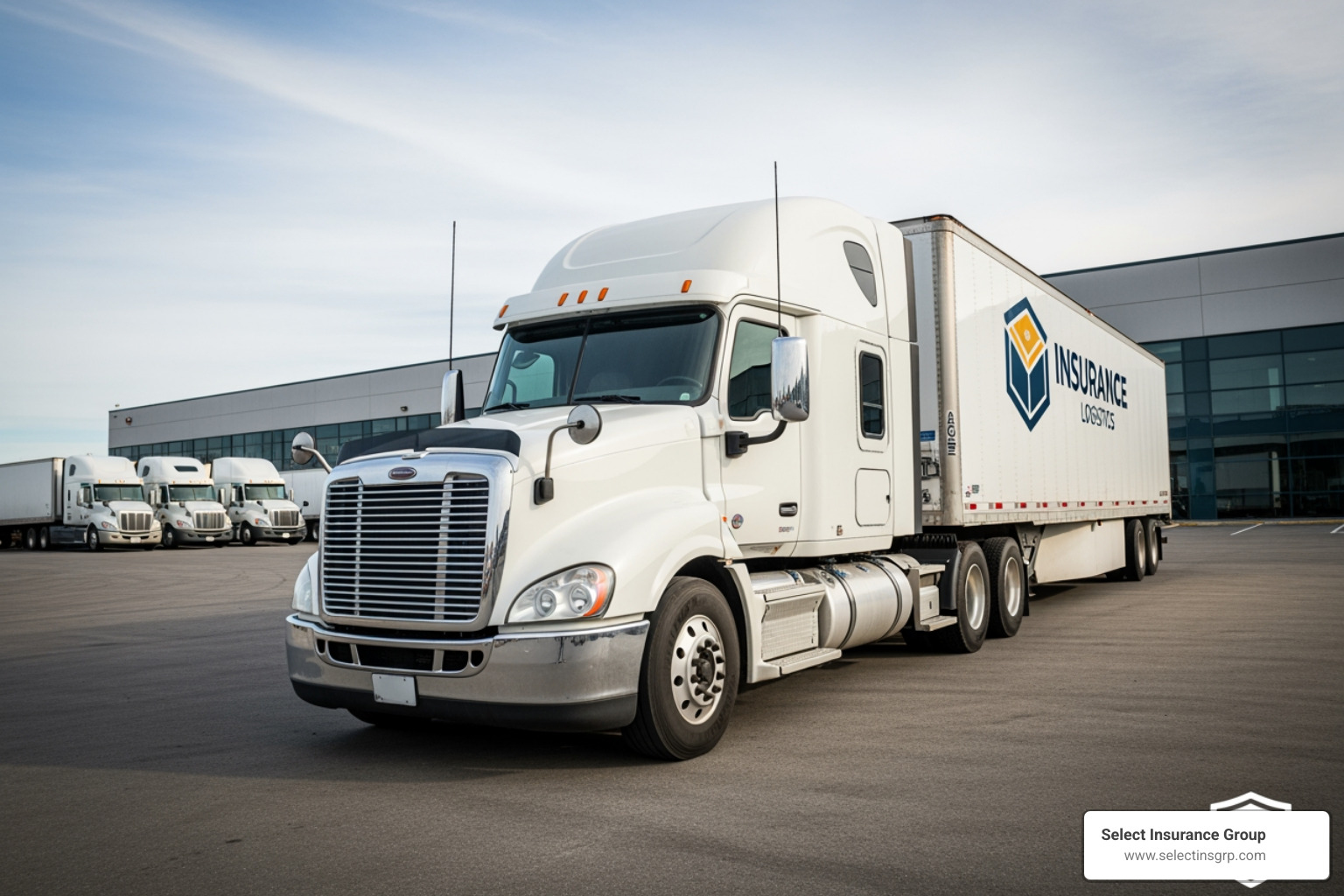
Building the right tractor trailer insurance policy means selecting the right components to protect your unique operation. A one-size-fits-all approach doesn’t work. The foundation of any solid policy rests on three core coverages: primary liability, physical damage, and cargo coverage. Together, they form a comprehensive safety net for your business.
Primary Liability: Your First Line of Defense
Primary liability is the bedrock of your policy. It’s federally required and protects you when you’re at fault in an accident that causes bodily injury or property damage to others. Bodily injury covers medical bills and lost wages, while property damage handles repair or replacement costs for another party’s vehicle or property. Federal minimums start at $750,000, but most brokers require at least $1 million. If you haul hazardous materials, you may need up to $5 million. Learn more on our Truck Liability Coverage page.
Physical Damage: Protecting Your Rig
Your truck is your livelihood. Physical damage coverage protects this asset from the cost of repairs or replacement. It includes:
- Collision Coverage: Pays for damage to your truck from a collision with another vehicle or object, or a rollover, regardless of fault.
- Comprehensive Coverage: Handles non-collision events like theft, vandalism, fire, weather damage, or hitting an animal.
Without this protection, a single incident could put you out of business.
Motor Truck Cargo: Securing Your Load
Motor truck cargo insurance protects you from financial loss if the freight you’re hauling is damaged, stolen, or destroyed. For for-hire truckers, this is essential, as most shippers require it. This coverage can protect against freight damage in an accident, theft of goods, or spoilage if a refrigeration unit fails. Coverage limits are often set by shippers and vary based on the value of the cargo. For more details, see our guide to Cargo Insurance for Truckers.
Navigating Legal Requirements and Insurance Filings
Operating a tractor trailer involves a complex web of federal and state regulations. Your tractor trailer insurance policy is critical for proving you meet these legal obligations. Failure to comply can result in fines and operational shutdowns.

Federal and State Mandates
The Federal Motor Carrier Safety Administration (FMCSA) sets the insurance requirements for interstate trucking. The goal is to ensure carriers can cover costs from accidents, including damages, injuries, and environmental cleanup.
For most general freight, the minimum liability coverage is $750,000. This increases for riskier cargo, potentially up to $1 million or $5 million for hazardous materials. You can review the specifics in Federal Motor Carrier Safety Regulation Section 387. States also have their own rules for intrastate trucking, which can vary widely, so it’s crucial to know the requirements in every state you operate in.
Understanding Insurance Filings: MCS-90, UIIA, and More
Insurance filings are documents that prove your coverage meets legal standards. They are submitted to regulatory bodies on your behalf.
-
MCS-90 Endorsement: This is a federally required endorsement on your liability policy. It guarantees that you can pay for public damages from your operations, even if your policy has certain exclusions. You can find more on the FMCSA’s MCS-90 Information Page.
-
UIIA Requirements: If you’re in intermodal trucking (moving freight between ships, trains, and trucks), you must meet the Uniform Intermodal Interchange Agreement (UIIA) standards. This involves specific insurance limits and endorsements for carriers who interchange equipment. See the full UIIA Insurance Requirements for details.
Many states also require their own specific forms. Keeping filings in order is critical to avoid shutdowns and fines. At Select Insurance Group, we ensure our clients in Florida, the Carolinas, Virginia, and Georgia have their paperwork in order.
What Influences Your Tractor Trailer Insurance Premiums?
Calculating your tractor trailer insurance premium involves assessing dozens of factors to determine your operation’s risk. Understanding these factors empowers you to make smarter decisions that can lower your costs. No two trucking operations pay the same rate, and our guide on the Average Truck Insurance Cost offers a detailed breakdown.

Key Factors That Determine Your Cost
- Driver Records & Experience: Clean driving records and years of CDL experience significantly lower premiums. A history of accidents or violations will increase them.
- Location & Operating Radius: Premiums are higher in congested urban areas and for long-haul routes that cover more territory and increase exposure to risk.
- Cargo Type: Hauling hazardous materials, high-value electronics, or refrigerated goods costs more to insure than general dry freight. Learn more on our Cargo Insurance for Truckers page.
- Your Truck: The make, model, year, and value of your rig affect your premium, as newer, more expensive trucks cost more to repair or replace.
- Claims History: A history of frequent claims signals higher risk to insurers and leads to higher rates. A clean record is rewarded.
- Coverage Limits & Deductibles: Higher liability limits increase your premium, while choosing a higher deductible (the amount you pay out-of-pocket) can lower it.
Smart Strategies to Save Money
You can take concrete steps to manage your tractor trailer insurance costs without sacrificing protection.
- Invest in Safety: Implement safety programs and regular driver training. Fewer accidents mean fewer claims and lower premiums over time.
- Hire Carefully: Conduct thorough background checks and prioritize hiring experienced, safety-conscious drivers.
- Adjust Your Deductible: If you have sufficient cash reserves, raising your deductible can provide immediate premium savings.
- Bundle Policies: Combine your truck insurance with other business policies like general liability for potential discounts.
- Pay Annually: Insurers often offer a discount for paying your premium in full upfront.
- Use Anti-Theft Technology: GPS trackers and alarm systems can earn you discounts on comprehensive coverage.
- Review Your Policy Annually: As your business changes, your insurance needs may too. An annual review ensures you’re not overpaying for coverage you don’t need.
- Document Risk Management: Show insurers your commitment to safety with documented maintenance schedules and cargo security protocols.
At Select Insurance Group, we dig into your operation to find ways to manage costs while keeping your coverage rock-solid. With access to more than 40 carriers, we find the best value for trucking businesses across Florida, the Carolinas, Virginia, and Georgia.
Frequently Asked Questions about Tractor Trailer Insurance
Here are answers to some of the most common questions we hear from owner-operators and fleet managers about tractor trailer insurance.
What is the difference between primary liability and non-trucking liability (bobtail) insurance?
This distinction is crucial for understanding when you are covered.
-
Primary Liability: This is your main coverage, active whenever you’re operating for business purposes—hauling a load, driving to a pickup, or deadheading. It’s the federally mandated coverage detailed in our Truck Liability Coverage guide.
-
Non-Trucking Liability (Bobtail): This covers you when using your truck for personal, non-business use, such as driving home for the weekend or to a repair shop on your own time. It fills the gap when you are not under dispatch.
In short, primary liability is for when you’re working, and non-trucking liability is for when you’re not.
How much liability coverage do I really need?
While the federal minimum is $750,000, you likely need more. Most shippers and brokers require at least $1 million in coverage, and some contracts demand $2 million or more. The right amount depends on your contracts, the cargo you haul (hazardous materials require higher limits), and your overall risk exposure. Carrying only the minimum can leave your business and personal assets vulnerable in a severe accident.
What are common optional coverages I should consider?
Beyond the core policies, several optional coverages can save your business from a major financial setback.
-
Trailer Interchange Insurance: Essential if you haul trailers you don’t own, as is common in intermodal trucking. It covers physical damage to the non-owned trailer while in your possession. Check the UIIA Insurance Requirements for specifics.
-
Rental Reimbursement with Downtime: Helps pay for a rental truck or compensates you for lost income if your rig is in the shop for repairs.
-
Refrigeration Breakdown Coverage: A must-have for reefer haulers, this protects you from losses if your refrigeration unit fails and your cargo spoils.
Other valuable options include Uninsured/Underinsured Motorist Coverage, General Liability for non-trucking risks, and Roadside Assistance. We help clients in Florida, the Carolinas, Virginia, and Georgia select the right combination of coverages for their real-world needs.
Conclusion
Your tractor trailer insurance is the foundation that keeps your business secure. We’ve covered the essentials: the core protections of primary liability, physical damage, and motor truck cargo insurance, as well as the legal requirements like the MCS-90 endorsement and UIIA compliance.
Every trucking operation is unique, which is why your insurance policy must be customized to fit your specific routes, cargo, and risks. A generic, off-the-shelf policy can leave you dangerously exposed.
This is where an experienced broker is invaluable. At Select Insurance Group, we’ve spent over three decades helping trucking businesses across Florida, the Carolinas, Virginia, and Georgia. We shop the market with over 40 carriers to find the best combination of coverage and cost for your operation.
Don’t leave your livelihood to guesswork. Let’s build a tractor trailer insurance program that gives you the confidence to focus on moving freight and growing your business.
Ready to get started? Get a commercial insurance quote in North Carolina and let’s talk about protecting your operation the right way.